
I Wasn’t Doing It Wrong. I Was Doing It Differently.
On late diagnosis, workplace survival, nervous system exhaustion, and the relief that comes when your life finally starts making sense.
I was 42 years old when I found out I was autistic.
Not “maybe autistic.” Not “a little autistic.” Autistic.
By then, I had already built a life. A career. A reputation for competence. I had spent decades learning how to survive in rooms that exhausted me while convincing everyone around me I was doing fine.
I wasn’t doing fine.
I was functioning. There’s a difference.
Looking back, the signs had always been there. Family members had already been identified. But like many women—especially Gen X women—I had learned how to perform my way through the world well enough that nobody thought to look closer.
Including me.
Later came the ADHD diagnosis. Then the fuller picture: AuDHD, PDA traits, hypermobility, Ehlers-Danlos syndrome, sensory processing differences, nervous system dysregulation. One by one, pieces of my life started making sense.
Not dramatically.
Quietly.
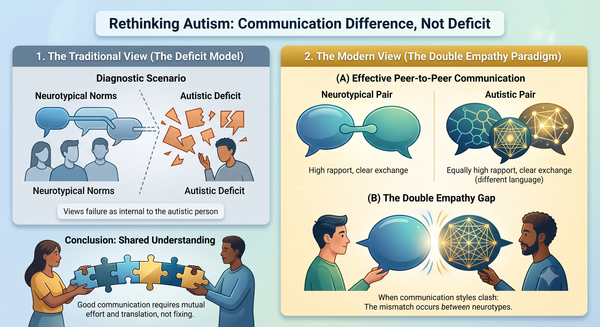
Like finally realizing the map you were given was never written in your language to begin with.
For most of my life, I thought I was failing at being a person in ways everyone else somehow understood instinctively. I thought I was too sensitive. Too intense. Too reactive. Too much.
I didn’t realize how much energy I was spending translating myself into forms other people found easier to understand.
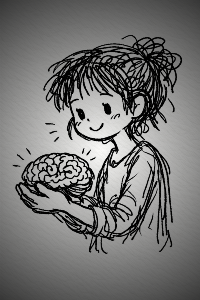
The diagnosis didn’t change who I was.
It changed the story I had been telling myself about who I was.
A Body That Was Always Listening
Long before I had words for any of this, my body already knew.
I noticed everything.
The shift in someone’s tone before they admitted they were upset. The tension underneath politeness. The way disappointment could change the atmosphere in a room before anyone said a word. I absorbed all of it constantly, without understanding why it seemed to affect me more deeply than it affected everyone else.
That gap became evidence against myself.
If nobody else was struggling this much, then surely the problem was me.
So I adapted the way many neurodivergent girls do: I became highly competent.
Achievement became camouflage.
If I performed well enough, stayed useful enough, achieved enough, maybe people wouldn’t notice how hard everything actually was. Maybe they wouldn’t notice how much energy it took to monitor social interactions, interpret tone, tolerate sensory overload, or recover from environments that constantly overwhelmed my nervous system.
From the outside, it looked like success.
From the inside, it often felt like survival.
There were periods of my life where the exhaustion became so deep that disappearing felt easier than continuing to explain myself. Not because I wanted to die, but because I could not imagine surviving forever inside systems that seemed effortless for everyone else and nearly impossible for me.
I know now that I wasn’t broken.
I was unsupported, unidentified, and carrying far more than anyone could see.
Including myself.
What They Called It Instead
Before autism and ADHD, there were other explanations.
Anxiety. Depression. “Too sensitive.” “Overthinking.” “Catastrophizing.”
Some of those diagnoses described real experiences. But none of them explained the full picture.
What nobody understood then was that my nervous system had been living in chronic overload for decades.
When autism and ADHD go unidentified—especially in women—the downstream effects can look like almost anything. Burnout can look like depression. Sensory dysregulation can look like emotional instability. Chronic overwhelm can become anxiety. Years of misunderstanding can become shame.
When you spend your life trying to function inside environments that do not fit your brain or body, eventually your nervous system starts sounding alarms.
Mine did.
The turning point wasn’t that I suddenly became a different person after diagnosis. It was that my experiences finally existed inside a framework that made sense.
The shame started loosening almost immediately.
Because there is a profound difference between: “I keep failing at things everyone else can do” and “My brain works differently, and nobody knew.”
That difference changes everything.
The Workplace Version of This Story
Work was rarely difficult because I couldn’t do the work.
The difficult part was always the people around the work.
I often felt like I was operating without the social instruction manual everyone else had somehow been handed at birth. I could do my job well—sometimes exceptionally well—but there was always this underlying feeling that I was slightly out of rhythm from the people around me.
Not openly rejected. Not fully accepted either.
There’s a particular kind of loneliness in being appreciated for your work while still feeling like the group never completely closes around you.
I did best with supervisors who took the time to understand how I operated from the beginning. Once someone understood that I processed deeply, asked clarifying questions, communicated directly, and needed context in order to function well, things usually stabilized.
But environments with frequent leadership changes were much harder.
Every new administrator meant starting over: rebuilding trust, re-explaining myself, re-learning someone else’s communication style, and hoping I would be understood before being misinterpreted.
And sometimes, before that understanding could happen, another dynamic would emerge.
Most workplaces have people who know how to navigate politics instinctively. They know how to shape perception, build alliances, and position themselves socially in ways I often did not fully recognize until much later.
As someone who was highly sensitive, direct, and often earnestly trying to understand or improve situations, I became easy to misread—and at times, easy to manipulate.
A reaction could be exaggerated. A misunderstanding could become a story. An interaction could quietly turn into a narrative about who I was before I even realized one was forming.
And because I processed distress visibly, my overwhelm sometimes became part of the evidence against me.
The more overwhelmed I became, the less safe I felt. The less safe I felt, the harder it became to regulate. And eventually, my body started carrying what my nervous system could no longer sustain.
What I understand now is that autism is not only social or cognitive. It is physiological.
Many autistic people experience significant gastrointestinal issues, chronic stress activation, inflammatory conditions, autonomic nervous system dysregulation, chronic pain, sleep disruption, and stress-related illness. For me, prolonged workplace stress did not stay emotional. It became physical.
My body kept score long before my mind fully understood what was happening.
There were environments I ultimately left not because I lacked capability, but because my nervous system could no longer survive the constant state of vigilance, misunderstanding, and instability.
At the time, I interpreted that as weakness.
Now I see it differently.
A nervous system can only translate itself for so long before exhaustion becomes illness.
The Women I Keep Recognizing
The more I understand myself, the more I recognize this story in other women.
The ones who hold everything together while quietly running on fumes. The ones who built entire identities around competence because competence felt safer than vulnerability. The ones who were called “gifted” and “too sensitive” in the same breath.
Some already know they are neurodivergent.
Others are standing in that uncertain in-between place where something resonates deeply, but they have not fully allowed themselves to ask the question yet.
And some are still decades away from the language for it.
Especially for Gen X women, many of us grew up before people understood what autism or ADHD could look like outside of young boys with obvious external behaviors. We learned to survive by adapting. By masking. By becoming hyper-aware of other people’s expectations while slowly losing connection with ourselves.
That survival worked.
Until it didn’t.
And when the understanding finally arrives, grief and relief often arrive together.
Grief for the years spent blaming yourself. Relief that there was never something fundamentally wrong with you to begin with.
Why I Keep Writing About This
I’m a therapist now. I sit with neurodivergent adults every day who are still carrying the same shame I carried for years.
People who believe they are failing at life when they are actually navigating chronic misunderstanding, unsupported nervous systems, and impossible expectations.
That is why this conversation matters.
Not because diagnosis magically fixes everything. Not because every struggling person is autistic or ADHD. But because accurate understanding changes the way people relate to themselves.
And sometimes that shift alone changes the trajectory of a life.
I cannot go back and give my younger self the language she needed.
But I can say this now, clearly, to the people still wondering:
You may not be failing nearly as badly as you think you are.
You may simply be exhausted from trying to live as someone you were never supposed to be.
Rachelle Pavao Goldenberg, LCSW
Founder of swiftmind.care — a neuroaffirming therapy practice supporting autistic, ADHD, and AuDHD adults.