Kindness Over Niceness: Why the Difference Matters More Than You Think

Share
Kindness Over Niceness: Why the Difference Matters More Than You Think

There’s a difference between kind and nice that doesn’t get talked about enough — and once you see it, you can’t unsee it.

Nice is a performance. Kindness is a practice.

brown bear plush toy on brown textile
Photo by Anastasiia Krutota on Unsplash

Growing up neurodivergent, many of us were taught to be nice above everything else. Smile. Don’t make it weird. Say the right thing. Don’t take up too much space. Niceness, at its core, is about managing how others perceive you. It prioritizes comfort — usually someone else’s — over truth, over connection, over what’s actually needed in a moment.

Kindness is something different. Kindness is a choice to act in someone’s genuine interest, even when it’s uncomfortable, even when it’s not smooth, even when your delivery isn’t perfect.


Neurodivergent People Often Get Labeled “Not Nice” For Being Kind

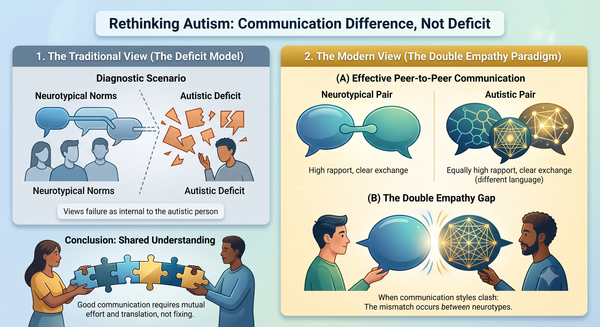
Here’s something that stings a little: a lot of neurodivergent people are naturally oriented toward kindness. We notice when someone’s hurting. We say the true thing when everyone else is staying quiet. We skip the pleasantries because they feel hollow and we’d rather just actually help.

And we get told we’re too blunt. Too intense. Too much.

What’s actually happening in those moments is that we’re being kind in a world that asked for nice. We’re offering honesty in rooms that expected performance. That’s not a flaw in us — that’s a mismatch between what we were offering and what the social script demanded.

Masking is the neurological cost of choosing nice over kind. When we suppress our instincts, our reactions, our genuine expressions of care — because they don’t look polished enough — we’re not being more kind. We’re just being more palatable. Those are not the same thing.


What Kindness Actually Looks Like

Kindness doesn’t always feel warm in the moment. Sometimes it looks like:

Telling a friend their business idea has a real problem before they sink their savings into it. Saying “I can’t show up the way you need right now” instead of over-committing and disappearing. Setting a limit with someone you love because the relationship matters too much to let resentment build. Asking someone what kind of support they actually want before jumping in to fix things.

None of those are nice. They’re all deeply kind.

a woman holding up a sign on the beach
Photo by Mei-Ling Mirow on Unsplash

For neurodivergent folks who’ve spent years learning to perform niceness as a survival strategy, reclaiming kindness can feel almost rebellious. Because it means trusting your instincts again. It means believing that your honest, sometimes-awkward, genuinely-meant care is worth more than a smooth performance that doesn’t actually land.


The Nervous System Piece

There’s also something worth naming about how niceness costs us neurologically. Performing social scripts — saying the expected thing, suppressing the honest reaction, monitoring every response for signs of approval — is exhausting in a way that’s hard to explain to people who don’t experience it that way.

Kindness, by contrast, tends to be regulated. It comes from a grounded place. When we act from genuine care rather than social anxiety, the nervous system responds differently. It’s the difference between giving from fullness and giving from fear.

This is why building a life around kindness instead of niceness isn’t just philosophically better — it’s actually more sustainable. Less masking. More authenticity. Fewer interactions that leave you dissociating in the car afterward.


A Reframe Worth Keeping

You don’t owe anyone a performance. You do have the capacity for real, meaningful, sometimes-imperfect kindness — and that matters so much more.

The next time someone says you’re “too direct” or “a lot” — it’s worth asking whether what they actually mean is that you’re not being nice enough. Because those are different things. And you get to decide which one you want to build your relationships around.

Be kind. Let nice go.