The Exhaustion Nobody Names
Translation burden falls unequally to the neurodivergent, but we can do better as a society.

Most people assume neurodivergent exhaustion comes down to executive functioning or social struggles. That’s part of it. But it’s not the whole story.
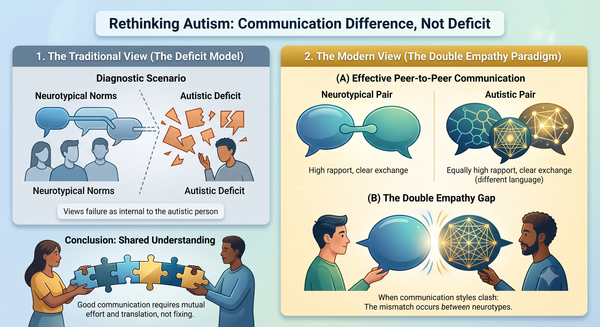
A lot of neurodivergent adults spend their day translating. Not just working. Translating.
They take big-picture thinking and squeeze it into bullet points. They take a bottom-up mind and force it to produce a pinpoint answer on command. They take something creative and alive and flatten it into a deliverable someone else can consume in thirty seconds. They take a natural rhythm, one that ebbs and flows and doesn’t run on a clock, and jam it into a nine-to-five grid it was never built for.
None of that is the actual task. It’s the translation layer sitting on top of the task. And you do it so constantly you stop noticing you’re doing it at all.

What’s Actually Happening in the Brain
There’s a reason this feels like a second job.
Every time you convert your natural cognitive style into a neurotypical format, you’re running an extra process in working memory. You’re holding the original thought, holding the required output shape, and managing the gap between them, all at once. That’s cognitive load stacked on cognitive load. Researchers who study masking in autistic adults describe something close to this: constant real-time monitoring and adjustment of your own presentation, on top of whatever the actual task requires. The task and the translation compete for the same limited resources.
This isn’t so different from what happens in bilingual code-switching. Holding two systems active and constantly converting between them costs something, even when you’re fluent in both. The difference is that most people get to clock out of code-switching. A lot of neurodivergent adults don’t. The translation is happening in the meeting, the email, the parent-teacher conference, the therapy intake form. It doesn’t turn off because there’s no version of the day where it’s not required.
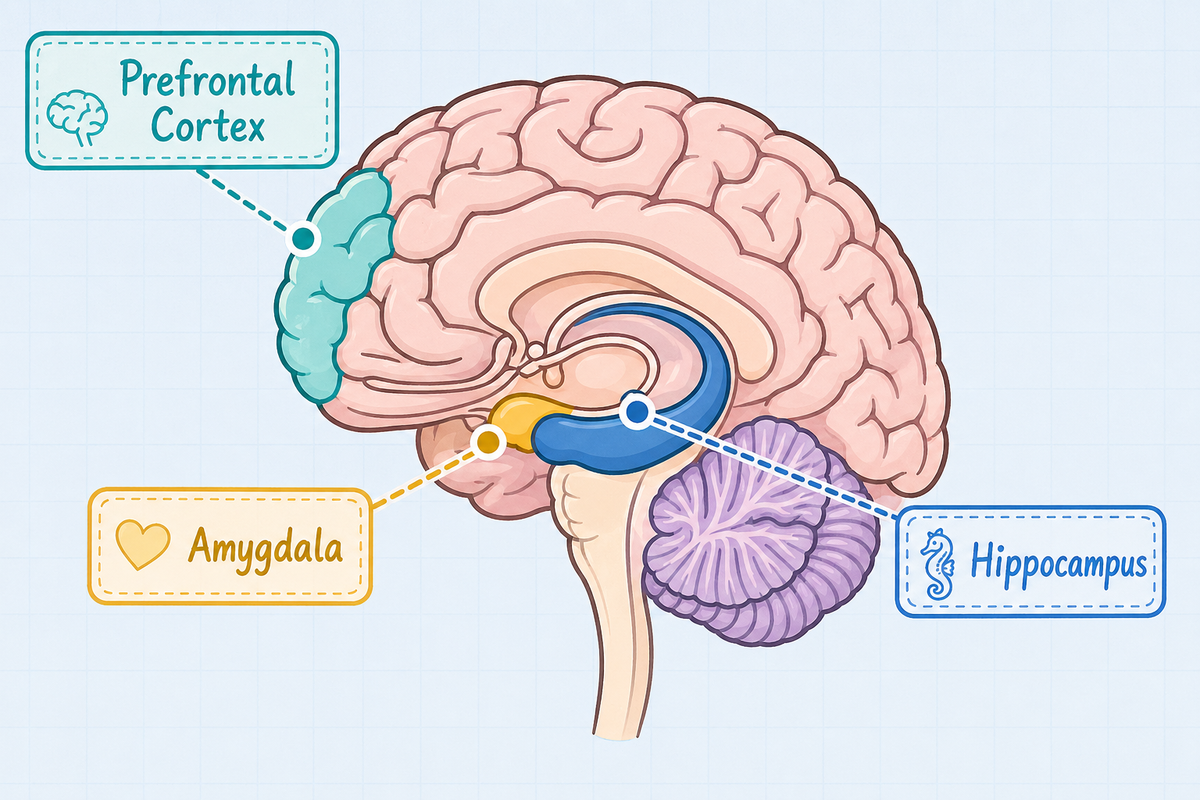
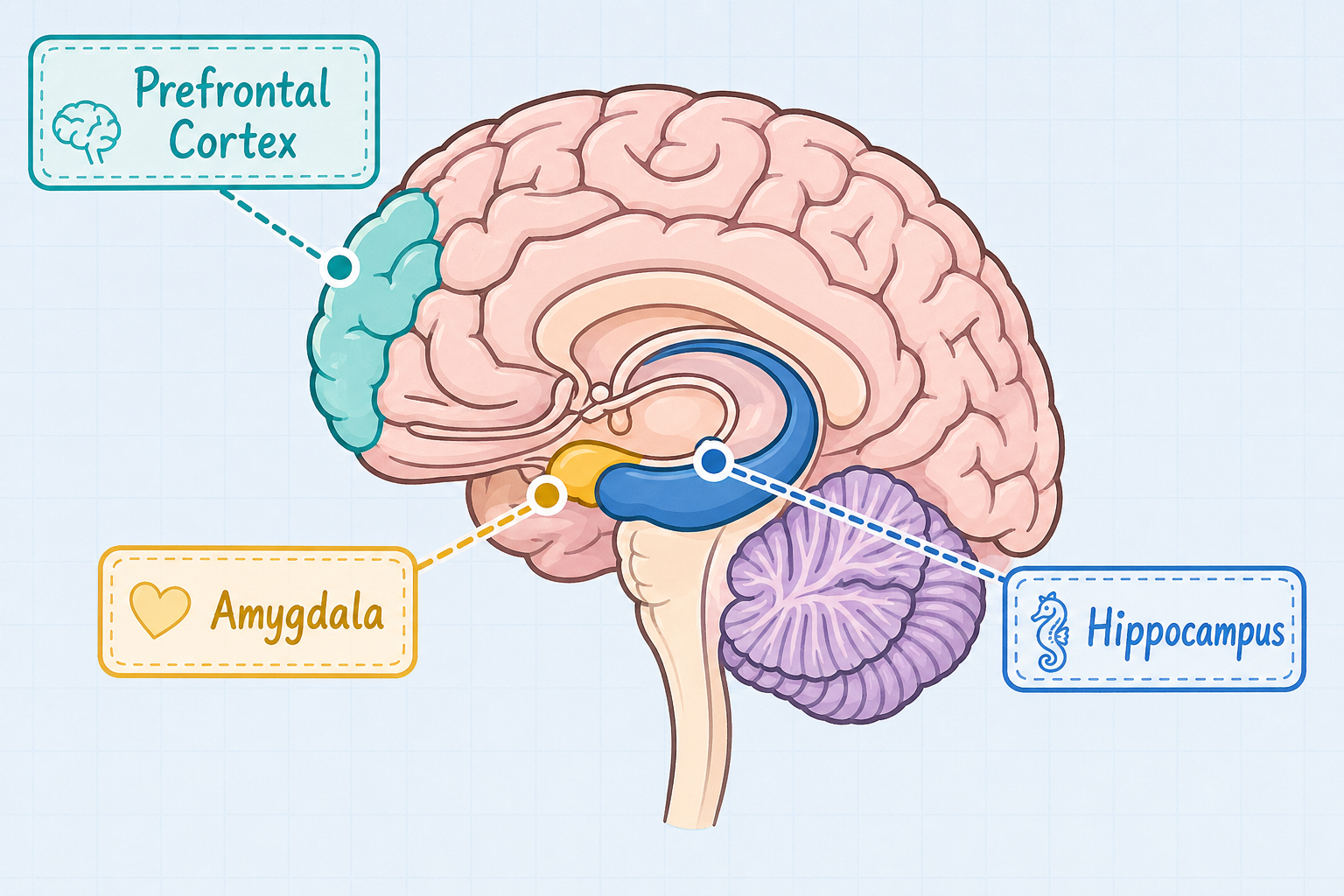
Add chronic stress to that picture, and the cost compounds. Sustained cognitive load taxes the prefrontal systems responsible for planning, flexibility, and self-regulation, the same systems already carrying the extra burden of the translation itself. You’re not just tired from doing the work. You’re tired from doing the work in a language your brain has to keep converting into.
That’s the piece that gets missed. It’s not a stamina problem. It’s not a motivation problem. It’s a structural one.
Why This Gets Misread
Because the translation is invisible, the fatigue looks unexplainable. To the outside eye, someone finished the report, showed up to the meeting, hit the deadline. Everything looks fine. Nobody sees the conversion happening underneath.
So when the exhaustion shows up anyway, it gets pinned on something else. Low resilience. Poor time management. Needing to toughen up. I’ve sat across from brilliant, high-functioning adults who’ve internalized every one of those explanations before they ever heard the real one: that they’ve been running two systems at once for years, and nobody told them that was the actual cost.
This Is Masking, and It’s Why We Missed It for So Long
Translation fatigue and masking are the same mechanism, looked at from two angles. Masking is usually described as suppressing visible traits: the stimming, the flat affect, the too-direct comment. But underneath that suppression is the exact process I’m describing here. You’re not just hiding a trait. You’re actively converting your internal experience into a format someone else will accept, in real time, over and over, all day.
That’s also why it took the field so long to see any of this clearly.
For decades, diagnostic criteria were built by watching how a person presented from the outside. If a kid could sit still, make eye contact, and turn in the homework, the assumption was that nothing was going on underneath. The cost of getting there was never measured, because nobody was looking for it. A child who was quietly translating themselves into an acceptable shape looked, on paper, like a child who didn’t need help. The good student. The easy patient. The one who never got flagged.
Girls and women were missed this way at especially high rates, because the traits that get you noticed as a child, like disruption or visible hyperactivity, are coded differently by gender. A girl who is inattentive but quiet, or autistic but has learned to mimic her peers closely, often just reads as shy, or sensitive, or a little odd. Not disordered. Not in need of support. Just personality. The translation was so effective that it erased the evidence clinicians were trained to look for.
Why Diagnosis Is Rising Now
This is also a big part of why late diagnosis has become so common, and why diagnostic rates in adults have climbed so much in the last decade.
It’s not that neurodivergence is suddenly more common. It’s that the criteria finally started accounting for internal experience instead of only external behavior. Researchers and clinicians started asking different questions: not just does this person struggle to sit still, but what is it costing them to sit still. Not just can this person hold a conversation, but what are they doing internally to hold it.
Once that shift happened, a lot of adults who spent their whole lives quietly translating finally had language for what they’d been feeling. Many of them were only recognized once the exhaustion of masking became visible on its own, often in their thirties or forties, after years of high performance that finally became unsustainable. The mask didn’t fail because they got worse at masking. It failed because the cost of running it for that long finally caught up with the system underneath.
So the rise in diagnosis isn’t an epidemic. It’s recognition catching up to a reality that was always there. The kids and adults who translated well enough to stay under the radar are the same ones we’re identifying now, later, and often only after burnout forced the question.
What Actually Helps
This is where it gets practical, because naming the problem isn’t the same as fixing it.
Reduce the number of translations, not just the workload. A lighter to-do list still exhausts someone if every item on it requires conversion. The relief comes from cutting the conversion step itself: voice memos instead of written summaries, mind maps instead of linear outlines, async updates instead of live meetings when a job allows it. Fewer format-shifts, not just fewer tasks.
Build in recovery for the translation, not just the labor. Rest that only addresses physical tiredness misses this. What needs recovery is the part of the brain that’s been holding two formats open all day. That often looks like unstructured time with no output attached to it at all, not another optimized routine.
Name it out loud, especially at work. In performance reviews, in team meetings, in your own head. “This isn’t taking me longer because I’m behind. It’s taking me longer because I’m converting it twice.” Employers who understand this stop mistaking translation time for a skills gap. Employees who understand this stop mistaking it for a character flaw.
Let some things stay untranslated. Not everything needs to become a bullet point. Some ideas are allowed to stay in the shape they arrived in, at least until you have the capacity to convert them. Protecting a little bit of un-translated space, in a notebook, in a voice note, in your own head, is not laziness. It’s where your actual thinking lives.
The Reframe
You’re not tired because you can’t keep up. You’re tired because you’ve been fluent in two languages your whole life, and one of them was never yours to begin with. That’s not a deficit. It’s a second job nobody put on the org chart.
The goal isn’t to get better at translating faster. It’s to build a life, and a workplace, where you don’t have to translate quite so much of yourself just to be understood.