What My Diagnosis Explained About Trust
...your instinct to believe people and assume good faith is not a bug


There is a specific type of person who assumes everyone means exactly what they say. This is not out of gullibility; their brain is simply wired to take language at face value, never anticipating a disconnect between someone's words and their intentions.
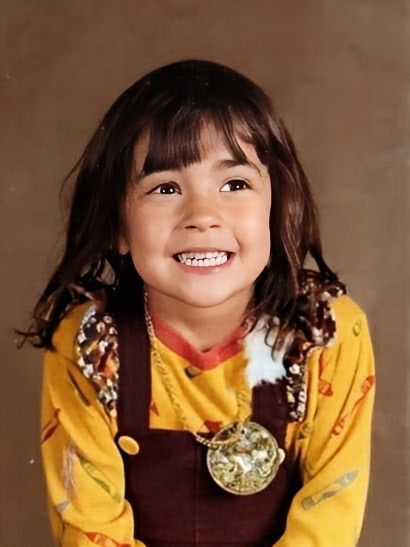
For years before I was diagnosed as autistic and ADHD, I was that person. I moved through the world believing most people operated in good faith. If someone promised to follow through, I trusted them. In almost every other context, I could see the big picture. I could hold complexity, plan years ahead, and read a room’s emotional temperature. However, the specific skill of detecting when someone's words didn't match their motives lagged behind everything else. Because I presented as sharp and capable, people assumed I could see deception coming, too.
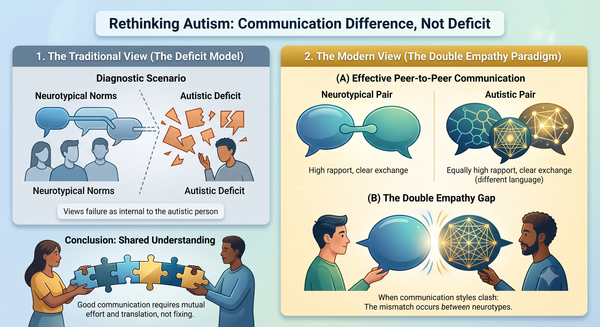
This is not a character flaw; it is a documented neurological pattern. Autistic cognition often processes theory of mind—the ability to sense the unspoken thoughts beneath someone's words—differently. Autistic adults can possess average or superior intelligence and still miss that layer of subtext. It is a different channel, not a diminished capacity, and it carries real consequences. Research shows autistic adults face a significantly higher risk of victimization across their lifespan, including financial exploitation and manipulation, sometimes by their own friends. One meta-analysis placed the prevalence of victimization in autistic individuals at over 80 percent. Reading that statistic for the first time stopped me in my tracks. It gave a name to a vulnerability I had felt but could never articulate.
Throughout my teens and twenties, I was simultaneously more mature than I sounded and more naive than I looked. I thought in systems, anticipated consequences, and engaged with complex ideas far beyond my years. Yet, I failed to recognize when someone was managing me rather than conversing with me. People recognize this vulnerability in you faster than you recognize it in yourself, and once they do, it becomes remarkably easy for them to take advantage, whether they mean to or not.
This dynamic surfaced in friendships, but it cut deeper in romantic relationships, where I repeatedly mistook being tolerated for being wanted. Beneath this trusting wiring lay a compounding factor: I did not fully believe I deserved better. When someone treated me poorly, I categorized it as what I deserved rather than a reflection of their poor choices. That same quiet belief followed me into professional spaces. I assumed people who processed and communicated like I did rarely reached the rooms I was aiming for. So I held back, allowing other people's assessments of me to override my own.
This began to shift long before my diagnosis. Driven by difficult experiences, I started building self-trust—not because anyone told me to, but because I gathered evidence. Every time I read a situation correctly or set a boundary that held, I proved to myself that my judgment mattered. Once I surrounded myself with safe people who allowed me to exist authentically, I felt secure enough to seek real answers about my identity. Safety had to come first; self-knowledge followed. This is largely why my diagnosis did not arrive until I was forty. I wasn't avoiding the truth; I just needed to feel steady enough to find it. When the answer finally came, twenty years of why made sense all at once.
Another piece of this experience is worth naming. Because I could see the entire picture—every risk, every potential failure—I often felt I lacked the certainty required to move forward. Total awareness can mimic a lack of confidence. It took years to start taking real risks without a guaranteed outcome. When I finally did, they paid off—not because the risks shrank, but because I stopped waiting for an impossible certainty.
To every misunderstood, hyper-aware, overly trusting person reading this: your instinct to believe people and assume good faith is not a bug. It is an ethical orientation, and it is a deeply decent way to move through the world. The goal is not to become perpetually suspicious or to constantly prove you have earned your seat. The goal is to build enough self-trust to preserve that openness, recognize your inherent value without needing external validation, and safely protect yourself along the way.
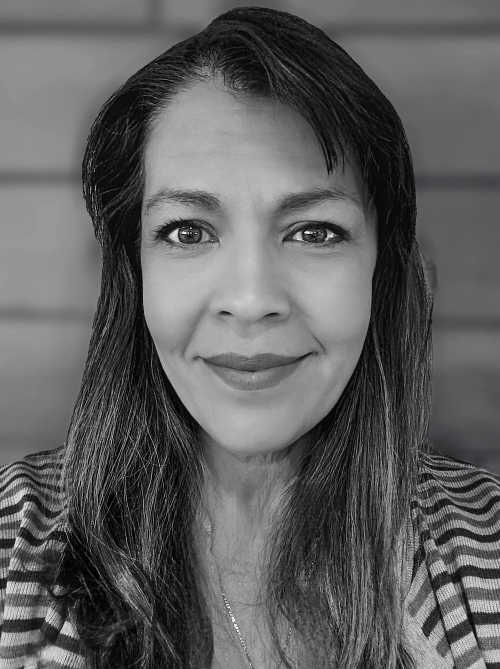
This journey is the foundation of my clinical work today. When I sit across from neurodivergent adults, I recognize their stumbles before they even finish describing them. My first priority is to assure them that their experiences are not their fault, they are not alone, and their minds are not broken. We are simply running on a different operating system, and every one of us deserves to be valued exactly as we are.
Understanding our past does not erase it, but it profoundly changes what happens next. Once you understand the root of your vulnerability, you can keep the parts of yourself most worth protecting—your trust, your openness, your good faith—while building the discernment to keep them safe. That does not lead to a smaller life. It leads to a fuller one, finally lived on your own terms.