When “Perfect” Is a Survival Strategy

How the Fawn Response Hides in Plain Sight — From Childhood Through the Workplace

Share
When “Perfect” Is a Survival Strategy

There’s a child in almost every classroom who gets described as “a dream.” Teachers love them. They follow instructions without pushback. They’re polite, agreeable, always willing to help. They never cause problems.

And then they get home and fall apart.

Mother scolds crying daughter on sofa in living room.
Photo by Vitaly Gariev on Unsplash

Meltdowns. Shutdowns. Tears over something seemingly small. The adults in their life are baffled, because this doesn’t match the child they hear about at school. It’s easy to chalk it up to “just being tired.” But what if something deeper is going on?

Now here’s the thing most people don’t talk about: this doesn’t end with childhood. That same pattern follows people straight into adulthood, straight into the workplace. The “perfect” child becomes the “perfect” employee, and the cost stays hidden.

The Response We Reward Instead of Recognize

Most of us know about fight, flight, and freeze. Those stress responses are pretty easy to spot. But there’s a fourth one that flies under the radar: fawn.

Fawning is the appease response. It’s compliance as a shield. And we miss it constantly because it looks like exactly what we want: a well-behaved, eager-to-please person who never rocks the boat.

A fawning child has learned, often through experience, that the safest thing to do is become whatever the authority figure needs them to be. The internal logic sounds something like: If I make you happy, you won’t hurt me. If I agree with everything, there won’t be conflict. If I’m useful, I’m safe.

This isn’t thriving. It’s surviving at enormous cost.

What This Looks Like in Childhood

For kids, fawning often shows up as the “good kid” label that adults cling to. They’re the ones who volunteer to help, who apologize even when they haven’t done anything wrong, who scan adult faces for cues about what mood is in the room before they decide how to act.

The toll builds quietly. Identity erosion. Emotional exhaustion. A growing disconnect from who they actually are versus who they’ve learned to perform being.

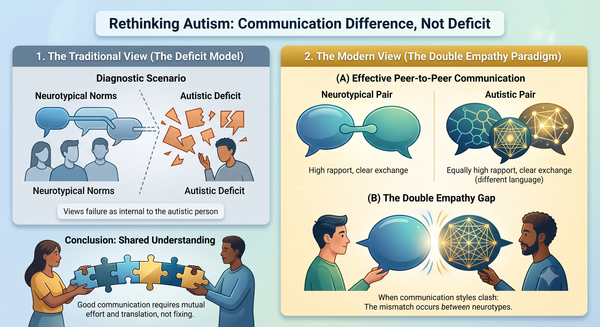
For neurodivergent children especially, fawning is tightly linked to masking. They’re already working overtime to read social cues and fit into environments that weren’t designed for the way their brains work. Add a fawn response on top of that, and you get a child who’s spending every ounce of energy just holding it together until they reach somewhere that feels safe enough to stop.

That “somewhere” is usually home. Which is why the meltdowns happen there.

And here’s the uncomfortable part: we miss it because it’s convenient. A fawning child makes the adult’s job easier. They don’t cause trouble. They do what they’re told. But compliance and wellbeing are not the same thing. A child who never disagrees is not thriving. They’re surviving.

When the “Perfect Child” Becomes the “Perfect Employee”

If nobody names this pattern, it doesn’t just go away. It grows up. The fawning child becomes the adult who can’t say no at work. The one who takes on every extra task, agrees with every decision in meetings, absorbs other people’s stress, and never pushes back even when they should.

They’re often described as “amazing team players” or “incredibly reliable.” Managers love them because they’re low-maintenance. They don’t complain. They smooth things over. They make everyone around them more comfortable.

But inside? They’re running on the same survival programming they learned as a kid. They’re still scanning for danger. Still performing. Still pouring energy into being whatever the room needs them to be, and going home completely emptied out.

The workplace version of the meltdown might look different. It could show up as chronic burnout, anxiety that seems to come from nowhere, or a creeping resentment they can’t quite name. It might look like someone who suddenly quits a job they seemed to love, and nobody can figure out why. Sometimes it’s physical: headaches, stomach problems, insomnia.

For neurodivergent adults, the workplace fawn-mask combination is particularly draining. They’re managing the social demands of professional life, suppressing their natural communication styles, and layering fawning behavior on top of all of it. The energy it takes is staggering, and it’s completely invisible to the people who benefit from it.

A woman sitting at a desk in front of a computer
Photo by Sujin c on Unsplash

Convenient for Whom?

This is the question that makes people squirm, and it should. When a child is “perfect” at school, who is that serving? When an employee never disagrees, who benefits?

The fawn response works, in the short term, for the people around the person doing it. It creates a smooth environment. It reduces conflict. But it comes at the direct expense of the person who’s performing compliance as a way to stay safe.

We have to be willing to ask ourselves: am I rewarding this person’s authenticity, or am I rewarding their ability to make my life easier?

What Actually Helps: For the Kids

If you’re a parent, teacher, or caregiver, here’s what can start to shift this pattern:

Give explicit permission to disagree. Don’t just assume a child knows it’s okay to push back. Say it out loud. “It’s okay to say you don’t agree with me.” “I want to know what you actually think, not what you think I want to hear.” These words matter more than you might realize.

Reward voice over compliance. When a child does express a genuine opinion or boundary, even clumsily, celebrate that. It took courage, probably more courage than we can see.

Model your own imperfection. Let kids see you make mistakes, change your mind, or admit you were wrong. Show them that being honest is more valuable than being “right.”

Make honesty genuinely safe. This means not just tolerating disagreement but welcoming it. If a child takes the risk of being real with you and gets punished or dismissed for it, they’ll learn very quickly that fawning was the better strategy after all.

What Actually Helps: For the Workplace

If you’re a manager, a colleague, or an HR professional, this matters for your teams too.

Create genuine psychological safety. Not the poster-on-the-wall kind. The actual kind, where people can disagree in a meeting without it being career-limiting. Where “I don’t think that’s going to work” is treated as valuable input, not insubordination.

Stop rewarding overwork as loyalty. The person who says yes to everything isn’t necessarily your most dedicated employee. They might be your most frightened one. Check in. Ask real questions. “Is this workload actually sustainable for you?” And mean it when you ask.

Normalize boundaries. Model saying no yourself. Talk openly about capacity. Make it clear that protecting your own energy isn’t a character flaw.

Pay attention to who’s quiet. In meetings, in team dynamics, in one-on-ones. The person who agrees with everything might not actually agree. They might just not feel safe enough to say otherwise. Invite their perspective directly. Not by putting them on the spot, but by making it clear you actually want to hear it.

Understand the neurodivergent experience. Neurodivergent employees are often carrying a double load of masking and fawning. A neuro-affirming workplace acknowledges different communication styles, doesn’t penalize people for not performing neurotypical social norms, and values contribution over conformity.

Compliance Isn’t Connection

Whether we’re talking about a seven-year-old in a classroom or a thirty-five-year-old in a conference room, the core truth is the same: a person who never disagrees with you is not necessarily okay. They may have just gotten very, very good at keeping themselves safe by keeping you comfortable.

Our job, whether as parents, teachers, managers, or coworkers, is to make it safe enough for the people around us to actually be themselves. Not the version of themselves that’s easiest for us. The real version. The one with opinions and boundaries and bad days and genuine thoughts.

That’s where real connection lives. That’s where real growth happens. Not in compliance. Not in performance. In the messy, brave act of being honest about who you are and trusting that the people around you can handle it.

And if you’re reading this and recognizing yourself in these words, whether as the child you were or the adult you are now, I want you to hear this: the fact that you learned to survive that way speaks to your incredible strength. And you deserve spaces where you don’t have to perform safety. You deserve to just be.

a hand holding a white flower
Photo by Valentina Ivanova on Unsplash