Why ACT Is the Primary Therapy Approach at Swift Mind Care

There is a question I hear often from autistic and ADHD clients, especially after years of trying different kinds of therapy:
“Why did therapy always feel like I was being taught how to act more normal?”
For many neurodivergent people, traditional therapy experiences can accidentally reinforce masking, self-criticism, and the belief that their brain is the problem.
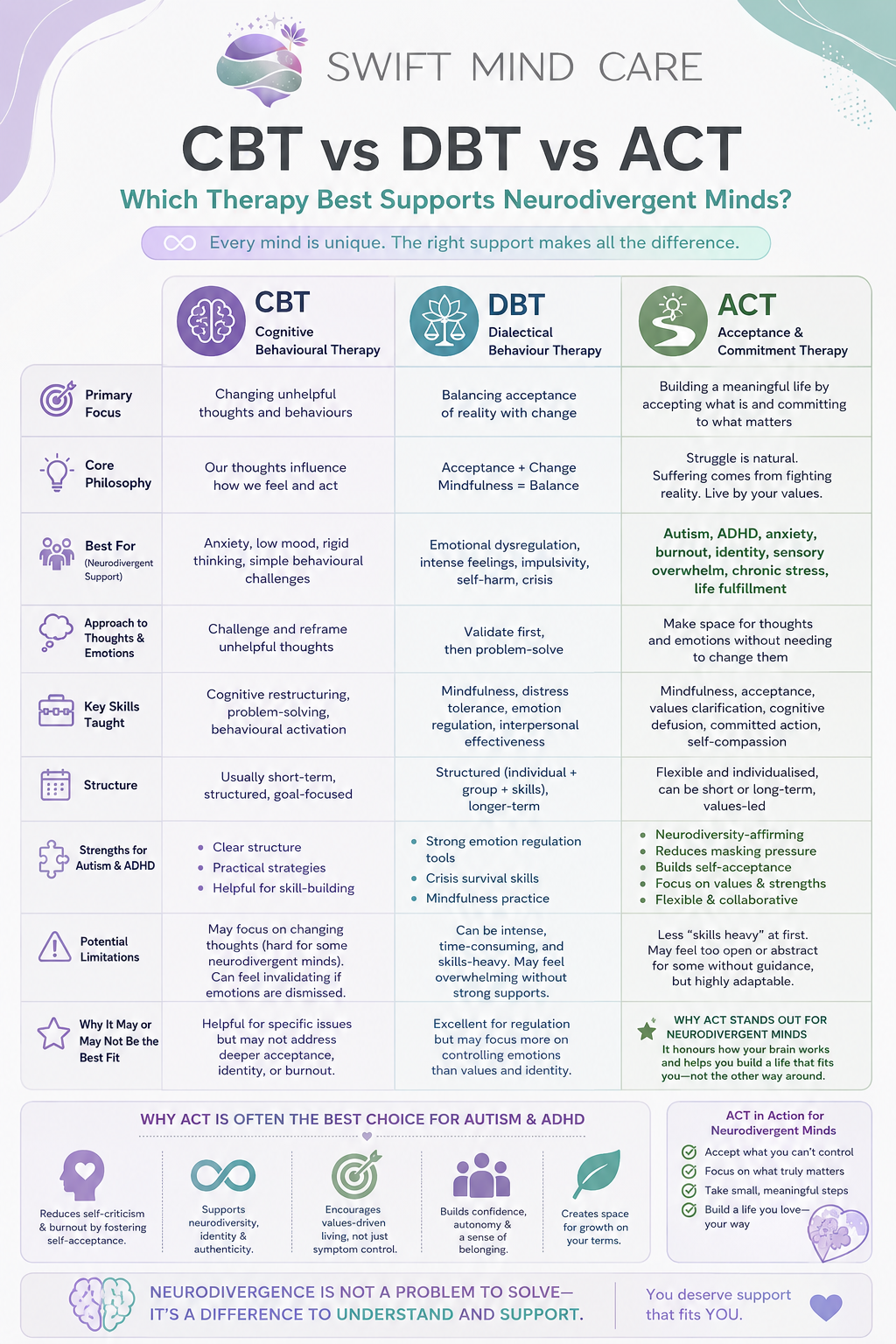
That is one of the reasons Acceptance and Commitment Therapy (ACT) became the primary framework we use at Swift Mind Care.
Not because it is trendy.
Not because it promises quick fixes.
But because ACT aligns with how many neurodivergent nervous systems actually work.
ACT is not about forcing yourself to think positively.
It is not about controlling every thought.
And it is not about “fixing” autism or ADHD.
Instead, ACT helps people build a life that feels meaningful, sustainable, authentic, and emotionally safer.
The Problem Many Neurodivergent People Experience in Therapy
Many autistic and ADHD individuals grow up receiving constant messages that they are:
- Too sensitive
- Too emotional
- Too distracted
- Too intense
- Too rigid
- Too much
- Not enough
Over time, many people learn to survive by masking.
Masking can look like:
- Forcing eye contact
- Hiding stimming
- Over-apologizing
- Constantly monitoring tone or facial expression
- Exhausting yourself trying to appear “put together”
- Pushing through sensory overwhelm
- Performing socially instead of feeling safe socially
The problem is that many therapeutic approaches unintentionally continue this pattern.
If therapy becomes entirely focused on changing thoughts, suppressing emotions, or increasing productivity without understanding the nervous system underneath it, neurodivergent clients often leave feeling more broken instead of more supported.
Many people start believing:
“If I could just think correctly, I would finally function normally.”
But neurodivergence is not a character flaw.
It is not laziness.
It is not lack of effort.
And it is not a failure of willpower.
Why ACT Feels Different
ACT takes a very different approach.
Instead of asking:
“How do we eliminate uncomfortable thoughts and emotions?”
ACT asks:
“How do we stop fighting ourselves long enough to build a meaningful life?”
That difference matters.
ACT recognizes something many neurodivergent people already know deeply:
Trying to force your brain to stop having difficult thoughts usually makes those thoughts louder.
Trying to avoid overwhelm often increases anxiety.
Trying to constantly control emotions can create shame and burnout.
ACT helps people learn how to:
- Notice thoughts without becoming trapped by them
- Make space for emotions instead of fearing them
- Reduce shame and self-criticism
- Build flexibility instead of perfectionism
- Clarify personal values
- Take meaningful action without waiting to feel “fixed” first
This is especially important for autistic and ADHD individuals who have spent years feeling like their internal experience is wrong.

ACT Is Neurodiversity-Affirming
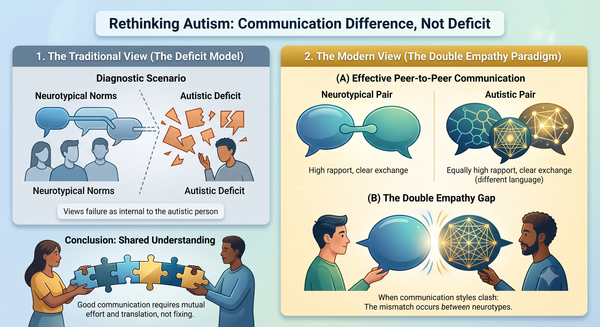
At Swift Mind Care, we strongly believe therapy should support neurodivergent people in understanding themselves — not teaching them to erase themselves.
ACT naturally aligns with neurodiversity-affirming care because it does not start from the assumption that the goal is to appear neurotypical.
Instead, ACT helps people:
- Understand their nervous system
- Reduce internalized shame
- Honor sensory needs
- Build self-trust
- Develop sustainable coping strategies
- Create lives that work with their brain instead of against it
That distinction is incredibly important.
Many neurodivergent adults are not struggling because they are incapable.
They are struggling because they have spent years disconnected from their actual needs.
Sometimes therapy should not focus on becoming more compliant.
Sometimes therapy should focus on becoming more authentic.
ACT Helps Reduce Masking Burnout
One of the biggest reasons ACT works well for neurodivergent individuals is because it addresses experiential avoidance.
In simple terms, experiential avoidance means trying to escape, suppress, or control internal experiences.
For neurodivergent people, this can look like:
- Hiding overwhelm
- Ignoring sensory exhaustion
- Suppressing emotions
- Constantly performing socially
- Pushing beyond limits
- Disconnecting from personal needs
Over time, this often leads to burnout.
Neurodivergent burnout is not just “being tired.”
It can involve:
- Loss of functioning
- Increased sensory sensitivity
- Emotional shutdown
- Skill regression
- Chronic exhaustion
- Difficulty communicating
- Depression and hopelessness
ACT helps interrupt this cycle by teaching people how to stop treating their internal experience like an enemy.
Instead of constantly asking:
“How do I make myself tolerate more?”
People begin asking:
“What actually helps me feel safe, regulated, and aligned?”
ACT Creates Flexibility Instead of Perfectionism
Many autistic and ADHD individuals live with intense perfectionism.
Sometimes this comes from trauma.
Sometimes from years of criticism.
Sometimes from the pressure to avoid mistakes in environments that were not built for them.
Traditional approaches can accidentally reinforce the idea that success means controlling every thought, behavior, or emotion.
ACT focuses on psychological flexibility instead.
Psychological flexibility means:
- Adapting without abandoning yourself
- Feeling emotions without becoming consumed by them
- Holding difficult thoughts lightly
- Making choices based on values instead of fear
- Continuing forward even when discomfort exists
That flexibility is often far more sustainable than perfectionism.
Because perfectionism eventually collapses under exhaustion.
ACT Helps People Build an Identity Beyond Productivity
Many ADHD and autistic adults come into therapy feeling like their worth depends entirely on functioning.
If they are productive, organized, high-achieving, or useful, they feel valuable.
If they struggle, they feel like failures.
ACT helps shift the focus away from constant self-measurement.
Instead of building identity around productivity, ACT asks:
- What matters to you?
- What kind of person do you want to be?
- What creates meaning?
- What relationships matter?
- What helps you feel connected and alive?
That shift can be deeply healing.
Because a meaningful life is not the same thing as a perfectly optimized one.
Why We Still Use Other Modalities Too
ACT is our primary framework, but it is not the only tool we use.
Many clients benefit from pieces of CBT, DBT, somatic work, executive functioning support, nervous system education, trauma-informed approaches, or practical skill-building.
Therapy should never become rigid.
The goal is not to force every person into one model.
The goal is to provide support that is flexible, compassionate, evidence-based, and affirming.
But ACT often becomes the foundation because it creates space for neurodivergent clients to stop viewing themselves as problems to solve.
The Heart of ACT
At its core, ACT teaches something many people have never been given permission to believe:
You do not have to hate yourself into becoming healthier.
You do not have to win a war against your own brain.
And healing does not require becoming someone else.
For many neurodivergent individuals, therapy becomes more effective when the goal shifts from:
“How do I become normal?”
to:
“How do I build a life that actually fits me?”
That is why ACT is at the center of the work we do at Swift Mind Care.
Not because it promises perfection.
But because it creates room for authenticity, flexibility, self-understanding, and sustainable growth.
And for many neurodivergent people, that changes everything.
At Swift Mind Care, we provide neurodiversity-affirming therapy and support for autistic and ADHD individuals navigating burnout, anxiety, identity, emotional overwhelm, executive functioning challenges, and life transitions. Our goal is not to help people mask better — it is to help people understand themselves better.