Your Brain Has Been Trying to Tell You Something
qEEG Brain Mapping and Neurotraining Available at Swift Mind Care

There’s a conversation I have with clients regularly. It usually goes something like this: they’ve been in therapy before. Sometimes for years. They’ve done the work — the journaling, the CBT worksheets, the mindfulness apps. They understand, intellectually, what happened to them and why they respond the way they do. And still, something isn’t shifting the way they hoped.
That gap between understanding and change is real. And for many of the people I work with — neurodivergent adults, people with complex trauma histories, those managing ADHD or Autism alongside the demands of high-functioning lives — talk therapy alone doesn’t always close it.
Swift Mind Care now offers something that can.
What Is qEEG Brain Mapping?
qEEG stands for quantitative electroencephalography. It sounds technical, but the concept is straightforward.
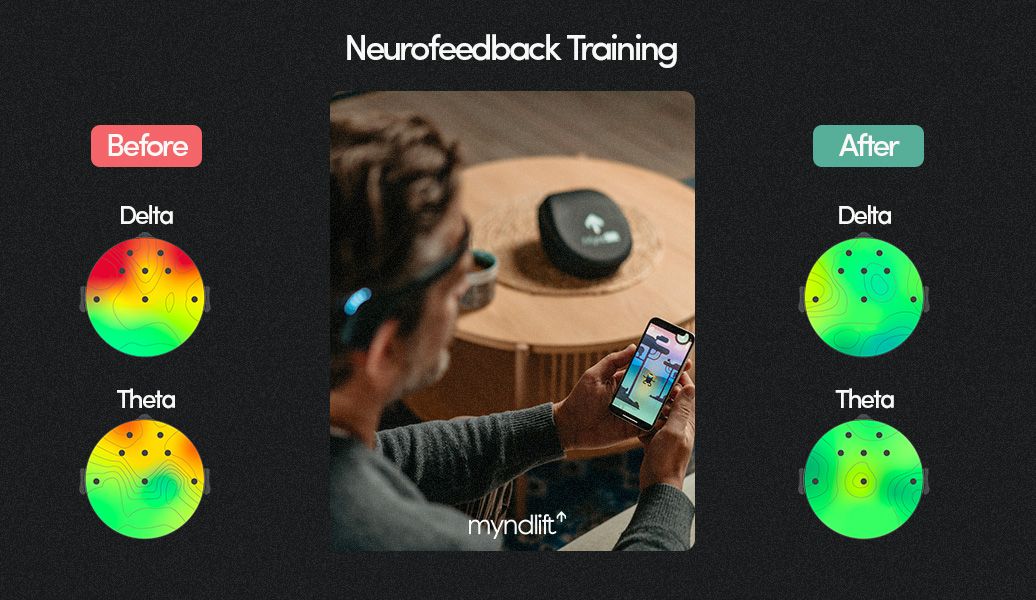
Using a specialized and modern headset made by Muse and programmed through the Myndlift program I offer, the device and a small additional sensor are placed on the scalp in different key spots to measure your brain’s electrical activity in real time — moving the sensor across regions responsible for attention, executive function, emotional regulation, memory, language, and social processing. That data is then compared against a normative database to identify which networks are over- or under-activated, and how those patterns connect to your symptoms.
Think of it as an EKG for the brain. It doesn’t tell us what you’re thinking. It shows us how your brain is functioning — the electrical landscape underneath the behavior.
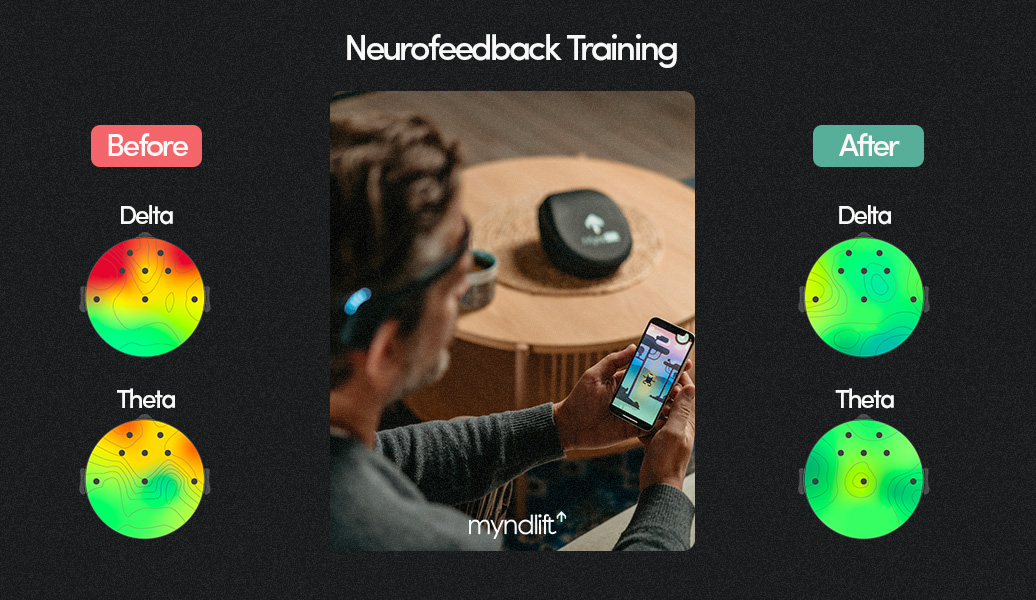
Once we have that map, we build an individualized treatment protocol using neurofeedback and neuromodulation. Neurofeedback trains the brain to shift into healthier patterns through real-time feedback loops — no medication, no external stimulation. Neuromodulation works alongside it, gently guiding the brain toward regulation the way training wheels help a child find balance, until the brain learns to sustain it independently.
This is not a one-size-fits-all protocol. It’s built from your brain’s specific data. That distinction matters.
Who This Is For
This service is designed with five populations in mind, because the research is strongest there and because these are the people who most often need more than what traditional care provides.
ADHD. Studies consistently show that ADHD brains carry an elevated theta/beta ratio — a measurable pattern linked to attention dysregulation. qEEG-guided neurofeedback has shown a 76% response rate in clinical reviews. For clients who’ve spent years being told to just try harder, seeing that pattern on a map is often the first time their experience feels validated by data.
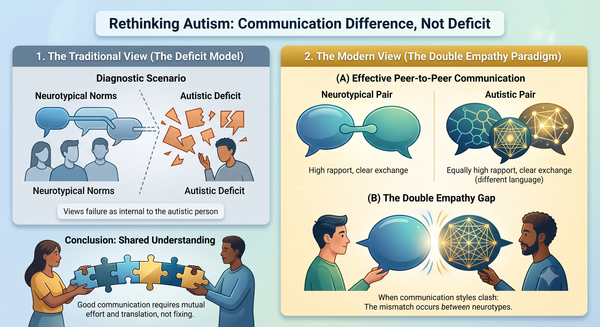
Autism. The networks involved in social processing, language, and emotional regulation show distinct brainwave patterns in Autistic individuals. Mapping those patterns allows us to target neurotraining precisely — rather than applying a generic protocol to a complex, individualized neurology. Some non-verbal Autistic individuals have shown improvements in verbal communication and emotional regulation following qEEG-informed treatment.
PTSD and Complex Trauma. Trauma lives in the nervous system. Talk therapy can help you understand what happened and build new narratives around it. But for many trauma survivors, the dysregulated nervous system underneath remains activated long after the story has been processed. A 2024 meta-analysis of 17 randomized controlled trials found neurofeedback produced significant reductions in PTSD symptoms, with a remission rate of 79.3% compared to 24.4% in control groups — with gains maintained at follow-up. For clients who’ve done years of trauma work and still feel stuck in their bodies, this is meaningful.
Athletes and Mental Performance. Physical training has always been measurable. Strength, speed, recovery time — coaches and athletes track all of it. Mental performance has historically been harder to quantify. That’s changing. Elite sport programs have used neurofeedback for years to train the brain states that underlie peak performance — the calm, focused alpha-dominant state associated with flow, the ability to regulate arousal under pressure, the capacity to reset quickly after an error without the cognitive spiral that tanks the next play. These aren’t soft skills. They’re brain skills (…and they’re trainable). qEEG mapping identifies where an athlete’s brain is getting in its own way — whether that’s excessive beta activity driving performance anxiety, disrupted attention patterns affecting focus at critical moments, or dysregulation following concussion or repeated sports-related stress. Neurotraining then targets those specific patterns directly. No guesswork about what’s “mental.” Data on what’s neural. For college athletes carrying the pressure of performance, identity, and transition all at once — this is a tool that meets them where they actually are.
Aging and Early Memory Concerns. Cognitive decline is not inevitable, but it’s also not something to address only after significant deterioration. A meta-analysis of 14 clinical trials found neurofeedback produced meaningful improvements in working memory and episodic memory in older adults, including those with mild cognitive impairment. It works with the brain’s existing plasticity rather than around it — which makes it a genuinely complementary option alongside other interventions for early Alzheimer’s and memory care.
On Cost — Let’s Be Direct
Insurance coverage for qEEG services is limited. It’s growing, and I expect that to continue as the research base does. However, for now, for most clients this is an out-of-pocket investment in your well being and this is an appropriate use of HSA and FSA funds. If you have a health savings account or flexible spending account, this qualifies — and using those dollars for something that actually generates data about your brain is one of the more effective ways to deploy them.
More importantly: for many clients, the precision this approach provides shortens the overall arc of treatment. When we know which networks are dysregulated and why, we stop spending months working around a problem we can’t fully see. We target it directly. That means fewer sessions over time, more efficient progress, and — for a lot of people — answers they’ve been looking for for years.
The cost of understanding your brain is not the same as the cost of continuing to not understand it.
Why I Offer This
The phrase I come back to most in my work is: your wiring was never the problem.
I’ve spent my career working with people who’ve been told — explicitly or implicitly — that they think wrong, feel too much, struggle too easily, or don’t try hard enough. People who built entire identities around managing a brain they’d been taught to see as broken.
Brain mapping doesn’t fix anything. What it does is show you the truth about how your brain actually works. And for the clients I sit with, that truth is almost never what they feared. It’s usually clarifying. It’s usually a relief.
That’s why I brought this in. Not as a gimmick or an add-on, but as a clinical tool that fits the work I was already doing — understanding the whole person, in their whole nervous system, in the context of their actual life.
Ready to Get Started
qEEG brain mapping and neurotraining are available now at Swift Mind Care for adults navigating ADHD, Autism, PTSD, complex trauma, early memory concerns, and mental performance for athletes.
If this resonates — if you’ve been in therapy and felt like something was still missing, or if you’ve wanted answers that go deeper than a symptom checklist — reach out. We’re ready.
More about how this program and how I work is at swiftmindcare.com/neurofeedback You can also contact us directly at hello@swiftmind.care or (866) 866-1904.
Your brain has been trying to tell you something. Let’s finally listen.
Rachelle Pavao Goldenberg, LCSW
Swift Mind Care | Walnut Creek, CA | Telehealth available throughout California