Creating Space for All of Us This Thanksgiving

AKA: Making an Inclusive Thanksgiving for Your Neurodivergent Family and Friends
Share
Creating Space for All of Us This Thanksgiving

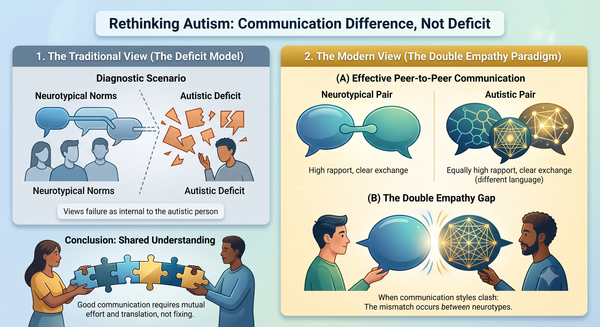
Thanksgiving is tomorrow, and I’m already thinking about all the ways our brains work differently around that table. Some people wait for perfect pauses in conversation. Others (like me) jump in mid-sentence. Some folks will be overwhelmed by the noise and stimulation. Others might struggle with the food itself.

Here’s what I want us to remember tomorrow: different doesn’t mean wrong.

a group of people sitting at a table with food and drinks
Photo by Natali Hordiiuk on Unsplash

On Communication Styles

For some of us, thoughts move fast. Like, if I don’t say it right now, it’s gone. Completely vanished. That interruption? It’s me trying to hold onto an idea before my brain moves three topics ahead.

Sometimes it’s anxiety talking. Being in a big group, wanting to connect, feeling that pressure building up inside until words just burst out. It’s not about taking over the conversation. It’s about releasing some of that internal tension.

And for neurodivergent folks, especially those of us with ADHD, this is part of how we’re wired. Our short-term memory doesn’t always cooperate. Waiting for the “right moment” can mean losing the thought entirely. Our minds are already racing ahead while we’re trying to hold on.

On Sensory Overload and Group Discomfort

Not everyone thrives in large gatherings. For autistic folks and others with sensory sensitivities, the combination of loud conversations, multiple people talking at once, kitchen sounds, strong food smells, and physical closeness can be genuinely overwhelming. It’s not antisocial to need breaks. It’s not rude to step away for a few minutes of quiet.

Some people might wear headphones or sunglasses inside. Some might need to eat in a different room or take walks during the gathering. Some might stim, fidget, or move in ways that help regulate their nervous system. All of this is okay.

On Food Differences

Let’s talk about the food piece too. Autistic people often have specific food textures, temperatures, or combinations that work for them. This isn’t “picky eating.” It’s about sensory experience and sometimes actual physical discomfort with certain foods.

Some people might need their foods separated on the plate. Some might only eat a few “safe” items. Some might bring their own food. And you know what? That’s completely fine. Nobody needs to eat everything on the table to participate in Thanksgiving.

yellow pasta on clear glass bowl
Photo by Hermes Rivera on Unsplash

For families wanting to create more neuroaffirming spaces this Thanksgiving:

Try saying “hold that thought, I want to hear it” instead of “stop interrupting.” It acknowledges the idea matters without shaming the person.

Have a quiet space available where people can decompress. Even just knowing it exists can reduce anxiety.

Don’t make a big deal about what or how much someone eats. Seriously. Let people serve themselves, and trust that they know what works for their body.

Consider that silence isn’t comfortable for everyone. Some people think out loud. Some need to verbally process. That’s not a problem to fix.

Maybe create space for multiple conversation styles and comfort levels. Not everyone needs to communicate or participate the same way to be respectful. Fast-paced, overlapping conversation can coexist with slower, more measured exchanges. People moving in and out of the room can coexist with those who stay planted at the table.

Ask yourself: is someone actually being harmed, or are they just existing differently than I’m used to? There’s a difference.

If someone in your family has ADHD or processes quickly, you could try visual cues or gentle hand signals that mean “I see you, I’ll pause in a sec” rather than verbal corrections that feel like criticism.

Dim the lights if you can. Lower the music volume. Small adjustments can make huge differences for sensory-sensitive people.

Remember that neurodivergent people often spend their whole lives trying to mask and fit into neurotypical expectations. Family gatherings can be exhausting when we’re constantly monitoring and suppressing our natural way of being. What if home was the one place we didn’t have to do that?

The Bottom Line

Tomorrow, there will be multiple ways of connecting, eating, and being happening at once. All valid. All human.

Understanding this changes everything. It moves us from judgment toward actual connection. It helps everyone feel like they belong, exactly as they are.

If you’re someone who interrupts, needs quiet breaks, eats differently, stims, or just feels overwhelmed by groups: you’re not broken. You’re not rude. You’re not too much or too little. You’re just wired differently, and that’s okay. You deserve to be at the table (or away from it when you need to be), participating in whatever way works for you, without constantly apologizing for how your brain and body work.

Happy Thanksgiving to all of us, however we show up. 💛

pastry on pan
Photo by Obi on Unsplash