Finding Your Center

The Circle of Control and Neurodivergent Wellbeing
Share
Finding Your Center

For neurodivergent individuals, the world can sometimes feel like it’s coming at you from all directions at once. When anxiety builds and overwhelm threatens, understanding where to direct your precious energy becomes not just helpful, it’s essential.

The Science Behind the Strategy

The Circle of Control model, developed by Stephen Covey, aligns beautifully with what neuroscience tells us about stress, anxiety, and cognitive load, particularly for neurodivergent minds. Research shows that perceived control is one of the most powerful predictors of psychological wellbeing and stress resilience. When we feel we have agency over our circumstances, our nervous system responds by downregulating threat responses.

For neurodivergent individuals, this matters even more. Studies on ADHD, autism, and other neurodivergent conditions consistently show differences in executive functioning, sensory processing, and stress response systems. The prefrontal cortex, our brain’s control center, can become overwhelmed more quickly when juggling multiple demands, leading to what researchers call “cognitive overload.” This overload doesn’t just feel uncomfortable; it actively impairs our ability to regulate emotions, process information, and make decisions.

Here’s where the research gets really interesting: studies on locus of control (whether we believe we can influence outcomes) show that an internal locus of control, believing we have agency, is associated with lower anxiety, better stress management, and improved mental health outcomes. Conversely, focusing on things outside our control activates the same neural pathways as chronic stress, flooding our system with cortisol and triggering the fight-flight-freeze response.

Why This Framework Protects Neurodivergent Nervous Systems

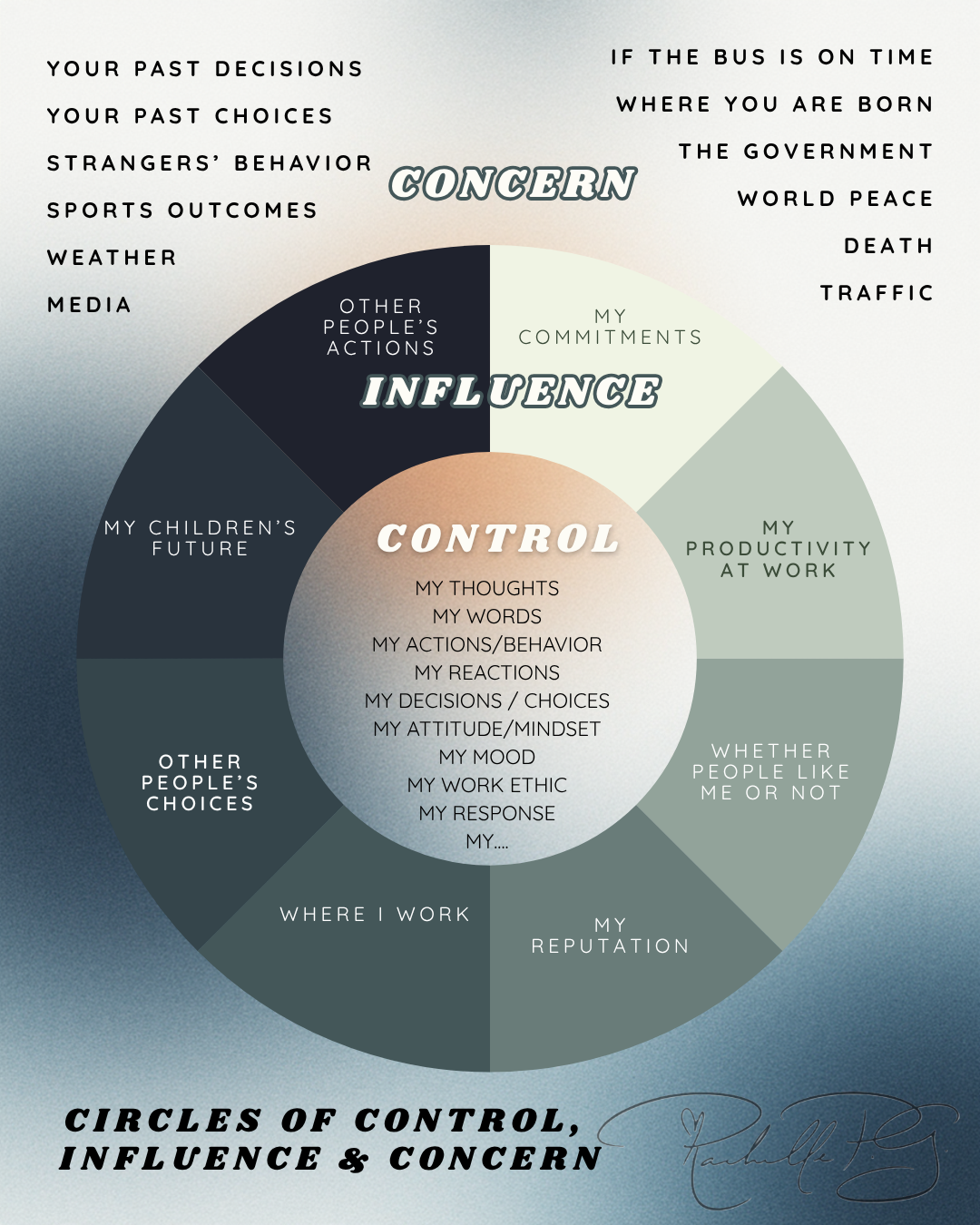
Picture three circles: your Circle of Concern (everything you worry about), your Circle of Influence (things you can affect), and at the center, your Circle of Control (what you can directly change).

Neurodivergent brains often process information more intensely and notice details others miss, a gift that can also mean heightened awareness of potential threats or problems. When combined with executive functioning differences, this can create a perfect storm: we notice everything in our Circle of Concern, our brain flags it all as important, and we attempt to mentally manage it all simultaneously.

Research on cognitive behavioral therapy and acceptance-based approaches shows that rumination, repetitively focusing on problems we can’t solve, maintains and intensifies anxiety. For neurodivergent individuals who may already experience anxiety at higher baseline levels, this rumination can rapidly escalate into overwhelm and sensory overstimulation. The autonomic nervous system becomes dysregulated, making it harder to filter stimuli, manage emotions, and engage executive functions.

The Transformative Shift

Here’s the powerful part: when we pour our energy into our Circle of Concern, worrying about things beyond our reach, we drain ourselves and invite overwhelm. But when we intentionally redirect that same energy toward our Circle of Control and Influence, something remarkable happens at a neurological level.

Studies on self-efficacy show that taking action on things within our control activates the brain’s reward systems, releasing dopamine (which many neurodivergent individuals need more of) and creating positive feedback loops. We reclaim our sense of agency. We feel grounded. We prevent the cascade that leads to overstimulation.

Research on preventive coping strategies demonstrates that proactively managing what we can control, rather than reactively responding to everything, reduces physiological stress markers, improves emotional regulation, and preserves cognitive resources for when we truly need them.

Practical Application for Neurodivergent Thriving

For neurodivergent minds, this shift is protective. It’s not about ignoring what matters, it’s about honoring your capacity by focusing where you can create actual change. This might mean:

  • Controlling your sensory environment: lighting, sound levels, textures, temperature
  • Influencing your daily structure: building in transition time, sensory breaks, and flexibility
  • Choosing your information diet: which notifications reach you, when you check news or social media
  • Managing your energy: saying no to activities that deplete your Circle of Control
  • Designing accommodations: tools, systems, and supports that work with your neurology

Studies on environmental modifications for neurodivergent individuals show that even small changes in controllable factors significantly reduce stress and improve functioning. This isn’t about perfectionism, it’s about strategic energy allocation.

Building Your Practice

When you feel anxiety rising, pause and ask: “Is this in my circle of control?” If not, can you gently redirect that energy toward something you can influence?

Research on metacognition, thinking about our thinking, shows that this simple awareness practice interrupts anxious rumination patterns and creates space for more adaptive responses. Over time, this builds what psychologists call “stress inoculation,” resilience that comes from repeated experiences of successfully managing challenges within our control.

This practice isn’t about toxic positivity or pretending difficult things don’t exist. It’s about respecting your neurodivergent nervous system’s needs and channeling your energy where it can actually create change. That’s not just smart, it’s scientifically supported self-compassion.

You deserve to feel empowered, not exhausted. Your neurodivergent mind is worthy of protection, support, and strategies that actually work. Start with what you can control, and watch your capacity grow from that centered place.