How Emotions Are Made - Book Outline With Nurodivergent Affirming Perspectives
Core Premise

Lisa Feldman Barrett argues that emotions aren’t hardwired or universal. Your brain builds them using past experiences, what’s happening in your body right now, and the culture you grew up in. For neurodivergent folks, this is good news—it means your way of experiencing emotions isn’t wrong, just different.

Part 1: Understanding Emotional Construction
Chapter 1: The Search for Emotion’s “Fingerprints”
Barrett spent years looking for proof that specific emotions create the same patterns in everyone—the same facial expressions, heart rates, or brain activity. She studied facial muscles, bodily responses, and brain scans. The result? These universal “fingerprints” don’t exist. When researchers combined data from many studies, they found huge variation instead of consistency. The same person expresses anger differently depending on the situation. Different people show completely different patterns for the same emotion. What looks like fear in one context might be surprise or excitement in another.
If people have told you your emotions don’t show “right” on your face, or that you’re hard to read, this research explains why. There’s no single correct way emotions should look. The brain can create the same emotion using totally different pathways—Barrett calls this degeneracy. Your version of fear might use different brain circuits than mine, and both are equally real.
Chapter 2: Emotions Are Constructed
Emotions don’t just happen to you—your brain actively builds them. Here’s how: your brain constantly predicts what’s about to happen based on past experience. These predictions flow through your whole brain, from high-level thinking areas down to basic sensory regions. When information comes in from your body or the world, your brain compares it to predictions. If they match, the prediction becomes your experience. If they don’t match, your brain updates and tries again.
Emotions work the same way. Your brain predicts what your body sensations mean using past learning. Racing heart and tight chest after bad news? Your brain might predict “sadness.” The same sensations during exercise? Your brain predicts “exertion” instead. The sensations themselves don’t automatically create emotions—your brain’s predictions do.
For neurodivergent people, this explains a lot. If you learned about emotions in environments that didn’t fit you, or with limited emotional vocabulary, your brain makes predictions using different information. That’s not broken—it’s construction with different materials.
Chapter 3: The Myth of Universal Emotions
For years, scientists taught that all humans recognize the same facial expressions for basic emotions—happy, sad, scared, angry, disgusted, surprised. Barrett shows this isn’t true. She found major problems with the classic studies. Many forced people to choose from a list of emotion words instead of describing what they actually saw. Studies didn’t account for how emotion words work differently across languages—some cultures have emotions that don’t exist in English, and vice versa. When researchers let people answer freely, cultural differences became obvious.
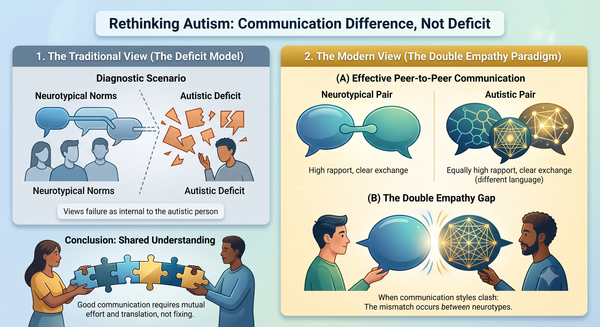
Research with the Himba people in Namibia showed they group facial expressions totally differently than Westerners. Autistic people already know this from experience—you might show joy without a typical smile, or feel intense fear without looking “scared” to others. Your emotional expressions might not match what people expect, and you might not read theirs easily either. Barrett’s research proves the “standard” isn’t standard at all—it’s just one cultural script, not a biological rule. If you’ve been told you’re “hard to read” or struggle to read others, the problem isn’t you. It’s the myth that everyone should express emotions the same way.
Part 2: How Your Brain Constructs Emotion
Chapter 4: The Origin of Feeling
Interoception is how your brain tracks what’s happening inside your body—heart rate, breathing, temperature, hormone levels, digestion, and more. This creates affect: basic feelings of pleasant or unpleasant, calm or worked up. Everyone experiences affect, but affect isn’t emotion yet. Affect is raw data; emotion is the meaning your brain adds using concepts.
Interoception also manages your “body budget”—how your brain allocates energy and resources. Your brain predicts what you’ll need and adjusts before you consciously need it, like sending signals to increase your heart rate before you climb stairs. When your budget is balanced, you feel good. When it’s running low, you feel bad.
Many neurodivergent people experience interoception differently. Some feel every tiny body sensation intensely. Others barely notice hunger, pain, or tiredness until it’s extreme. When your interoception works differently, emotional awareness can feel confusing because you’re working with different information than others expect. Barrett also explains affective realism: your brain’s predictions shape what you actually perceive. You literally see what you expect to see, not pure reality.
Chapter 5: Concepts, Goals, and Words
Your brain learns concepts by finding patterns in experience. Emotion concepts don’t work like definitions with strict rules. Instead, your brain groups together different experiences that serve similar purposes. “Fear” isn’t one specific thing—it’s many different instances grouped together because they all relate to threat or danger.
Words are crucial for learning emotion concepts. When adults tell a child “You’re frustrated” or “That’s disappointment,” they help the child group different body feelings into categories. Without words, you’d still feel good or bad, but you wouldn’t divide those feelings into specific emotions like anger, sadness, or fear.
This matters hugely for neurodivergent people. If you grew up without words for certain feelings, or the available words didn’t fit your experience, you’re building emotions with a different vocabulary. Maybe you feel something between anxiety and excitement that doesn’t have a name. Maybe you need more specific words—not just “sad” but different types of sad. This is why many neurodivergent people benefit from expanding their emotional vocabulary. You’re not learning the “right” concepts—you’re building concepts that actually match your experience. More precise emotional words (emotional granularity) literally changes what you can feel and how you can manage it.
Chapter 6: How the Brain Makes Emotions
Your brain stores compressed summaries of past experiences. When something happens, it unpacks these summaries in a cascade from general to specific. These predictions flow through your whole brain, reaching areas that control sensing and movement. At the same time, information flows up from your body and the world. Your brain compares predictions to actual sensations. Good match? That prediction becomes your experience. Mismatch? Your brain updates and tries again, incredibly fast.
This is how emotions get made: your brain predicts which emotion category best explains your current body changes in your current situation. That prediction constructs your emotional experience.
Your body budget runs constantly in the background, predicting needs and allocating resources. ADHD, autism, and other neurodivergent brains often run these predictions differently. Maybe your brain doesn’t signal hunger at typical points, so you don’t notice until you’re shaky. Maybe it uses extra resources on sensory processing, so you get overwhelmed faster. Maybe predictions about social situations keep mismatching reality, which feels exhausting. These aren’t malfunctions—your system has different patterns and priorities. Understanding this helps explain why emotions might feel intense, confusing, delayed, or just different from what others describe.
Part 3: Implications and Applications
Chapter 7: Emotion and Illness
Your brain’s predictions don’t just create emotional experiences—they change your body. When your brain predicts threat, it releases stress hormones and inflammatory chemicals even before anything threatening happens. Chronic threat predictions mean chronic inflammation, which contributes to heart disease, diabetes, and autoimmune conditions.
Depression, anxiety, and chronic pain all involve body budget problems. Your brain might constantly predict bad outcomes, keeping your budget depleted (depression). Or it might predict threats that don’t happen, wasting resources (anxiety). Chronic pain happens when your brain predicts pain even without much tissue damage—the prediction creates real pain.
The split between “mental” and “physical” illness is artificial. They work through the same systems: prediction, body budgeting, inflammation, hormones. For neurodivergent people constantly dealing with sensory overload, social demands that don’t fit, and environments requiring constant compensation, this chronic strain is real and measurable. Your brain works overtime in a world built for different brains. This shows up in stress hormones, inflammation, and immune function. Barrett says individual health practices matter (sleep, food, exercise), but we also need systemic change. When environments constantly drain certain people’s body budgets, individual wellness isn’t enough.
Chapter 8: Mastering Your Emotions
Barrett offers concrete ways to work with your emotional construction. First, emotional granularity: learning more precise emotional words literally expands what you can feel and regulate. Instead of just “bad,” you might learn anxious, frustrated, disappointed, overwhelmed, or depleted. Each word gives your brain different guidance. “Bad” doesn’t say what to do; “depleted” suggests rest; “frustrated” might mean taking a break or trying a different approach.
Second, recategorization: when you notice body sensations, you can offer your brain different concepts. Racing heart doesn’t have to mean “anxiety”—it could mean “excitement” or “my body needs something.” This isn’t denial; the same sensations can legitimately fit different emotion concepts.
Third, change predictions by changing patterns. Your brain predicts based on past experience, so new experiences create new predictions. This might mean changing your environment or deliberately trying situations that challenge unhelpful predictions.
Fourth, manage your body budget. Sleep, food, movement, and comfort directly affect emotions. When your budget is low, your brain predicts threat more easily. For neurodivergent people, these tools work with how your specific brain builds emotions. You’re not forcing yourself into a neurotypical mold—you’re working with your brain’s prediction system, expanding your options, and managing your unique body budget needs.
Chapter 9: Emotions and the Law
The legal system assumes everyone experiences and expresses emotions the same way, which creates injustice. Courts judge witness believability based on expected emotional displays. A victim who cries seems truthful; one with a flat expression seems suspicious, even though trauma often reduces emotional display and people express emotions differently. Defendants who show “appropriate remorse” get more lenient treatment; those who don’t express emotions in expected ways get seen as dangerous.
Juries and judges automatically guess what someone felt based on faces and behavior, but this is unreliable. You can’t read someone’s internal state from external displays because there are no universal patterns. What you’re actually doing is projecting your own expectations based on stereotypes and culture.
Laws treat “crimes of passion” more leniently than “cold” crimes, assuming emotions override control while rational thought maintains it. But this is false. Your brain is always in control through prediction—you never lose control to emotions. Feeling out of control is just a feeling, not proof of what your brain was doing.
The “reasonable person” standard pretends there’s an average person whose reactions define normal, but this person doesn’t exist. It’s really enforcing cultural norms through law. Neurodivergent people face systematic disadvantage. Autistic flat affect gets read as no remorse. Difficulty describing emotions in expected ways seems like deception. Different emotional displays get misread as dangerous. The stakes are literal freedom—people face harsher sentences and wrongful convictions because their emotional construction doesn’t match assumptions.
Chapter 10: Emotions and Illness (Revisited)
The split between “mental” and “physical” illness breaks down when you understand how the system works. Depression, anxiety, chronic pain, autoimmune conditions, heart disease—all involve overlapping mechanisms of prediction, body budgeting, inflammation, and stress response.
Depression isn’t one thing—it’s many different paths leading to similar outcomes, most starting with body budget imbalance. Your brain constantly predicts threat or loss, keeping stress responses active, flooding your system with stress hormones and inflammation. This affects neurotransmitters, immune function, sleep, appetite, and energy. What gets called “depression” is often your brain accurately responding to chronic body budget depletion.
Chronic pain involves your brain predicting pain even when tissue damage is minimal. The pain is real—constructed through the same brain mechanisms as injury pain—but prediction drives it, not current damage. Inflammation links everything together. Chronic inflammation contributes to depression, anxiety, pain, and physical disease. Your brain’s predictions can trigger inflammation through stress pathways even without infection or injury.
For neurodivergent people, the implications are huge. Constant sensory overload, social demands that don’t fit your processing, environments requiring ongoing compensation, systemic marginalization—these chronically activate stress and drain body budgets. Medicine often treats the resulting experiences as individual mental illness without acknowledging environmental causes. Barrett argues we need systemic change, not just individual treatment. When environments systematically drain certain people’s body budgets, individual solutions aren’t enough. This validates that autistic burnout, ADHD crashes, sensory shutdowns, and emotional exhaustion aren’t personal failures. They’re predictable when your body budget runs in the red because the world isn’t built for your brain.
Part 4: Moving Forward
Chapter 11: Emotion and the Law (Extended Applications)
Barrett expands how legal systems should change based on constructed emotion theory. She challenges the idea that emotion and reason are separate systems, with reason representing control and emotion representing loss of control. In reality, your brain doesn’t have battling systems—it has integrated networks that build both thoughts and emotions through prediction.
Legal ideas about free will depend on whether you “feel” in control. But feeling in control is just an experience your brain constructs. It doesn’t prove what your control networks were actually doing. You can feel totally out of control while your brain functions normally, or feel in control while biases heavily influence your choices.
Criminal intent can only be guessed, never known for certain. Yet juries must infer it based on their own beliefs, stereotypes, and even their current body states. Hungry judges grant parole less often than judges who just ate—their low body budgets create bad feelings that get interpreted as “this person doesn’t deserve parole” instead of “I need lunch.”
Bias operates outside awareness through predictions. You see what your brain predicts based on cultural learning. This affects police shootings (officers’ brains predict threat based on racial stereotypes) and Stand Your Ground laws (what counts as “reasonable” fear depends on culturally-learned predictions). Eyewitness testimony is unreliable because perception isn’t objective—your brain constructs it through prediction. Different people watching the same event perceive it differently. Seventy percent of people convicted based on eyewitness testimony were later cleared by DNA evidence.
Barrett argues for reforms: eliminate defenses based on emotional loss of control; educate legal workers that they’re guessing at emotions, not reading them; revise “reasonable person” standards to acknowledge diversity; reform eyewitness procedures; address biases in interpreting emotional expressions. When the legal system understands how brains actually work, it can be fairer to people whose emotional construction differs from assumptions.
Chapter 12: Is a Growling Dog Angry?
Barrett uses animal emotions to show what’s uniquely human about emotional construction. She describes her dog Rowdy, whose playful growl was seen as aggression by a scared boy. From the boy’s view, Rowdy was angry. But from Rowdy’s view, what was happening?
Barrett says emotional experience requires three things: sensing body state and feeling pleasant/unpleasant (affect), emotion concepts (categories for grouping different experiences), and social reality (sharing these concepts culturally across generations).
Animals clearly have the first part. All animals experience pleasant and unpleasant feelings, arousal and calm. They have body budgets and survival circuits for fighting, fleeing, feeding, and mating. But these aren’t emotion circuits in Barrett’s framework.
The key difference: emotions require concepts, and abstract concepts like “anger” need language for sharing and refining. Some animals can categorize—chimps show abstract thinking. But evidence doesn’t support that they create abstractions at the level humans do with language. Without language, it’s extremely hard to learn and share abstract concepts that group diverse experiences under single categories.
The dog isn’t “angry” from its own perspective. The dog experiences bad feelings, high arousal, and makes a threat display driven by survival circuits. But that’s different from building the emotion “anger” using a culturally-shared concept. This doesn’t diminish animals—they suffer, feel pain, and deserve moral consideration. Barrett argues against human-centered interpretations not to deny animals’ experiences but to understand them on their own terms.
This matters for neurodivergent readers because it shows how much language and culture shape human emotions. Even within humanity, different conceptual frameworks create different emotional realities. If you learned different concepts, had limited emotion language, or developed concepts that don’t match cultural scripts, your emotional reality is genuinely different—not wrong.
Chapter 13: From Brain to Mind: The New Frontier
Barrett wraps up by examining what makes minds unique and what this means for human diversity. The brain is incredibly complex: experience creates unique neural connections in each person. Neural plasticity continues throughout life—you’re constantly rewiring based on learning. Degeneracy means different neural pathways can create the same outcome. Networks serve multiple purposes, making the brain flexible and adaptive.
This complexity evolved for good reasons. But humans aren’t blank slates. We’re born with some basic concepts: positive and negative feelings (pleasant/unpleasant), and high and low arousal. These create affect. Beyond these basics, our emotional lives get built through prediction, categories, and cultural learning.
Barrett identifies three universal ingredients in human minds. First, affective realism: you experience what your brain predicts, not objective reality. Second, concepts: mental categories that make sense of sensations and guide action. Third, social reality: shared agreements that make abstract ideas functional. Money works because we agree it has value. Emotions work as shared categories because we collectively teach and use emotion concepts.
The human brain evolved “to create more than one kind of mind.” Human diversity in emotional experience isn’t deviation—it’s the system working as designed. Different cultures shape thinking and feeling differently. Western cultures often separate rational thought from emotional reaction. Hindu and Buddhist frameworks integrate them. Different cultures use different emotion concepts—some emotions exist in one culture but not another.
Individual brain differences mean people with similar anatomy have different experiences. Your brain shapes itself based on your environment. Different pathways achieve the same goals. Networks adapt based on context. This enables survival—each brain fits its specific situation.
For neurodivergent readers, this is deeply validating. Variation in emotional construction is part of human diversity, not defect. Your brain built emotions using different concepts, learned in different contexts, with different body sensing, shaped by different demands. The result is a different kind of mind—exactly what human brains evolved to create. You’re not a broken neurotypical. You’re a different architecture serving different needs. Human brains create many kinds of minds, and that diversity is the point.
Why This Matters
Traditional emotion theory has been used to invalidate neurodivergent experiences for decades. If emotions are universal and hardwired, then difference gets labeled as disorder. Barrett provides scientific proof for what many of us knew: there are many valid ways to experience and express emotions.
Your alexithymia isn’t failure—it’s a different way of building emotional experience. Your flat affect isn’t broken expression—it’s different patterns that don’t match cultural scripts. Your emotional intensity isn’t poor regulation—it might be differences in body sensing, budgeting, or available categories. Your difficulty reading faces isn’t a deficit—facial expressions don’t universally encode emotions, and you haven’t learned (or can’t use) the same cultural scripts others rely on.
The law and illness chapters matter because they show real consequences of outdated theories. When courts assume universal emotions, neurodivergent people face wrongful conviction and harsher sentences. When medicine pathologizes neurodivergent emotions without acknowledging environmental causes, we get inadequate treatment focused on individual fixes instead of systemic change.
Understanding emotions as constructed lets us demand accommodations, justice reforms, and healthcare that fit human diversity. We can advocate for legal systems that don’t privilege neurotypical emotional construction. We can push for healthcare addressing environmental factors, not just symptoms. We can build education teaching multiple ways of understanding emotion. We can create spaces that don’t require constant emotional performance according to narrow scripts.
This isn’t just about understanding yourself better. It’s about having scientific backing to challenge systems that marginalize neurodivergent emotional construction. It’s about shifting from “fix the individual” to “change the environment.” It’s about recognizing that human brains evolved to create many kinds of minds—and building a world that actually makes room for that diversity.