So, What is "Social Pragmatic Communication Disorder"?

A Path Toward Connection

Share
So, What is "Social Pragmatic Communication Disorder"?

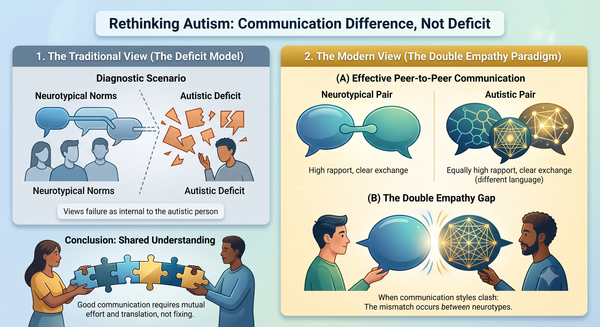
If you’ve been told you have Social Pragmatic Communication Disorder (SPCD), or if the description resonates with you, I want you to know something important: there’s nothing wrong with how your brain works. What we’re talking about here isn’t about fixing you. It’s about understanding your communication style and, if you want, finding ways to feel more comfortable connecting with others.

people sitting on chair inside room
Photo by Toni Koraza on Unsplash

What SPCD Actually Means

SPCD shows up in how we use language in social situations. You might find it tricky to pick up on unspoken social rules, read between the lines, or adjust how you talk depending on who you’re with. Maybe you take things literally when others expect you to “just know” what they mean. Perhaps you’re not sure when it’s your turn to speak, or you find small talk exhausting and pointless.

Here’s the thing: none of this means you’re communicating “wrong.” It means you’re communicating differently. And in a world that wasn’t designed with neurodivergent communication styles in mind, that difference can feel isolating.

What Therapy Can Actually Look Like

When you work with a therapist who gets it (someone like me, who approaches this from a neuro-affirmative perspective), we’re not trying to make you mask or perform a version of communication that doesn’t feel like you. Instead, we focus on:

Building awareness – Understanding your own communication patterns and what feels natural versus what feels forced. Sometimes just naming what’s happening can reduce so much stress.

Translation, not transformation – Learning to “translate” between different communication styles when you want to, not because you have to. Think of it like learning a second language that you can choose to use.

Identifying your needs – Figuring out what kind of connections you actually want. Not everyone needs a huge social circle, and that’s completely okay.

Reducing anxiety – A lot of the difficulty around communication comes from anxiety about getting it “wrong.” We can work on that without changing who you are.

Finding your people – Exploring environments where your natural communication style is already understood and valued.

four persons sitting on chairs near window during daytime
Photo by AllGo on Unsplash

The Power of Neurodiversity Support Groups

One of the most valuable places to start? A neurodiversity support group. These spaces are designed to be safe, low-pressure environments where neurotypical social rules aren’t the default.

In these groups, you can practice connecting with others who genuinely understand what it’s like. There’s less performance, less anxiety about saying the “right” thing, and more room to just be yourself. You might find that communication feels completely different when you’re with people who share similar experiences.

Group activities also give you a chance to try out new approaches to connection without the pressure of one-on-one therapy or the stress of navigating neurotypical spaces. You’re learning alongside others, which can feel a lot less lonely.

Moving Forward

If you’re considering therapy, look for someone who uses neuro-affirming language and approaches. That means they should respect your autonomy, honor your communication style, and never pressure you to change who you are at your core.

Together, we can explore what connection means to you and build skills that actually serve your life, not just help you blend in. Because the goal isn’t to make you more palatable to a neurotypical world. The goal is helping you feel more comfortable and confident as you navigate that world on your own terms.

You deserve to feel understood. You deserve connections that don’t require you to shrink yourself. And you deserve support that actually affirms who you are.