The Story of Emma Geller-Green (yes..,that baby from "Friends")
A Fictional Story of Second Chances and First Opportunities (a lesson in acceptance)
Prologue: The Girl Who Grew Up Between Two Worlds
Emma Geller-Green was born in 2002 to two people who loved her fiercely but couldn’t always love each other. Her father, Ross, was a paleontologist whose mind worked in beautiful, exhausting spirals—hyper fixating on Mesozoic era fauna for days, then pivoting to learning Mandarin, then building elaborate dioramas at 3 AM. He never knew he had ADHD until Emma was diagnosed at seven, and suddenly his whole life made sense.
Her mother, Rachel, was ambitious and charming, but Emma learned early that love in her mother’s world was conditional—based on achievement, appearance, and whether you made her look good to her friends. Rachel’s narcissism wasn’t malicious, exactly, but it was constant. Every one of Emma’s struggles became about how it affected Rachel. Every success was something Rachel took credit for.
Growing up between them taught Emma contradictory lessons: from Ross, she learned that different minds are beautiful, that passion matters more than polish, and that it’s okay to need three attempts and a detailed chart to explain something simple. From Rachel, she internalized that she was never quite enough—too awkward, too intense, too much and somehow simultaneously not enough.
By her teens, Emma had her father’s ADHD and autism, her own anxiety disorder, and a desperate need to prove she was worthy of love. She masked relentlessly. She burned out repeatedly. She watched her father thrive in academia despite his neurodivergence and wondered why she couldn’t make the corporate world work the same way.
It took her until her mid-twenties to understand: Ross had found a place that valued his particular brilliance. She was still searching for hers.
This is the story of how Emma Geller-Green—daughter of chaos and conditional love—found not just a job, but a purpose. And how she became the person both her parents needed but in different ways: someone who saw potential in others the way Ross had always seen it in her, and someone who proved that worth isn’t performed for others’ approval, but built through authentic connection.

Emma’s hands trembled as she sat in the waiting area, her resume folded and unfolded seventeen times—she’d counted. The office buzzed with a frequency that made her skin prickle, and the fluorescent lights hummed at a pitch that felt like needles. She’d almost walked out twice.
This was her ninth interview in four months. The previous eight had ended the same way: awkward silences after she’d explained the gaps in her work history, polite smiles that didn’t reach eyes when she’d asked about remote work options, the familiar phrase “we’ll be in touch” that never led anywhere.
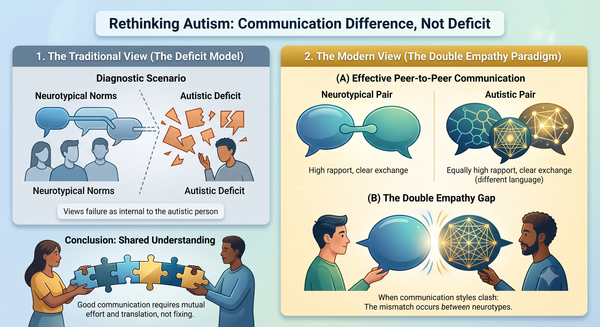
Her ADHD made traditional office environments feel like trying to think inside a tornado. Her autism meant that the unspoken rules of workplace culture were a language she was still learning to speak. Together, they’d made finding work feel impossible.
But she had something. She knew she had something.
She’d taught herself to code during the pandemic, building small apps that solved problems she noticed in her community—a sensory-friendly event finder, a task manager designed for non-linear thinkers, a communication tool for people who processed information differently. The work wasn’t polished, but it was innovative. It was hers. Her dad had been her beta tester, calling at odd hours with detailed feedback delivered in rapid-fire tangents that somehow always circled back to useful insights.
“Emma Geller-Green?”
The manager who emerged wasn’t what she expected. Sarah Kim had kind eyes and moved with unhurried intention. She led Emma to a quiet corner office and closed the door, immediately lowering the overhead lights.
“I noticed you squinting in the waiting room,” Sarah said simply. “Better?”
Emma nodded, something in her chest loosening slightly. She thought of all the times her mother had told her to “just deal with” her sensory issues, to stop being “so dramatic.” This simple accommodation felt like someone had turned down the volume on the world.
The interview was different. Sarah didn’t just ask about her resume—she asked about her projects, her process, her ideas. When Emma explained that she worked best in intense bursts with breaks in between, Sarah didn’t frown. When Emma asked if she could wear noise-canceling headphones at her desk, Sarah said, “Of course.”
“I have to be honest,” Emma said finally, the words tumbling out in a way that would have mortified her mother but that reminded her of her father’s earnest rambles. “I don’t have traditional experience. I’ve struggled to keep jobs because... because I work differently. I think differently. But I have a positive attitude, and I really, really want to learn. That’s all I can promise.”
Sarah was quiet for a moment, then smiled—a real smile, not the performance smiles Emma had learned to recognize from her mother.
“Emma, let me tell you something. Every groundbreaking team I’ve ever built had people who thought differently. Your brain isn’t a liability—it’s exactly what we need. When can you start?”
Emma felt something crack open inside her—years of trying to be the person her mother wanted, the polished professional who could “pass” as neurotypical, the daughter who made everyone comfortable. Maybe she didn’t have to be that person anymore.
Maybe she could just be herself.
Five Years Later
Emma stood before the executive board, her presentation queued up, her hands steady. She was now Director of Innovation and Accessibility, leading a team of thirty-five people who were building technology that worked for everyone—not just the neurotypical, able-bodied default.
Her team had just launched an AI platform that adapted to individual learning and working styles, already being used by major school districts and Fortune 500 companies. The prototype had started with her own struggles, her own needs, her own understanding that the world was full of brilliant people waiting for systems that could meet them where they were.
She’d called her dad when the platform launched. He’d cried and gone on a twenty-minute tangent about how her work reminded him of the paradigm shifts in paleontology when scientists started questioning their assumptions about dinosaur behavior. It was the highest compliment he knew how to give.
Her mother had posted about it on Instagram—”So proud of my brilliant daughter!”—with a photo from Emma’s college graduation because Rachel thought it was more flattering than Emma’s current appearance. Emma had learned to find it funny rather than hurtful. Mostly.
But what she was proudest of wasn’t the technology.
It was the team itself.
She’d hired Marcus, a talented designer with dyslexia who’d been told he “wasn’t detail-oriented enough.” She’d brought on Jasmine, whose anxiety had led to her being labeled “difficult” at previous jobs, but who was now their lead project manager with flexible hours and clear communication protocols. There was David, whose traumatic brain injury had ended his first career but opened a second one in user experience research. And Kenji, autistic like her, whose pattern recognition abilities had revolutionized their data analysis.
Each person on her team had been told, in one way or another, that they weren’t enough. That they needed to change, to mask, to be different than who they were.
Emma had given them what Sarah had given her: a chance. Not despite who they were, but because of it.
She thought about that interview often—about sitting in that chair, folded resume in hand, offering the only things she had: a positive attitude and a desire to learn. About Sarah seeing potential where others had seen only deficits. About how different that was from growing up with a mother who saw her challenges as embarrassments to be hidden and a father who understood her completely but couldn’t always help her navigate a world that didn’t understand either of them.
Now, she was Sarah for thirty-five other people. And they were building something extraordinary.
Three Years After That
The conference hall was packed. Emma stood at the podium, her team seated in the front row, as she accepted the Technology Innovation Award. Her father was there too, having flown in from his university, fidgeting with excitement. Her mother had said she’d try to make it but had a work conflict—Emma had stopped taking it personally years ago.
But she set the crystal trophy aside to share something more important.
“Eight years ago, I walked into an interview with nothing but hope and a handful of half-finished projects. I’d been rejected so many times I’d started to believe what the world kept telling me—that my neurodivergence was a problem to be managed, not a perspective to be valued.
I grew up watching my father—a brilliant scientist—navigate the world with undiagnosed ADHD and autism. He taught me that different minds see different solutions, that passion is more valuable than perfection, and that the people who think in spirals rather than straight lines often end up discovering new paths entirely.
But I also grew up in a world that told me my differences were deficits. That I needed to hide my stims, force eye contact, pretend that fluorescent lights didn’t feel like knives, and perform normalcy until I was so exhausted I couldn’t function. I internalized the message that love was conditional on being less of who I was.
One manager saw something different. Sarah Kim saw potential. She took a chance on someone who didn’t fit the mold, and in doing so, she changed not just my life, but the lives of millions of people who now use technology designed with them—not despite them—in mind.
Sarah taught me that the most powerful thing a leader can do is recognize that ‘different’ and ‘deficient’ are not the same word. That the people who struggle with traditional systems are often the exact people who can build better ones.
Today, my team—made up primarily of neurodiverse, disabled, and otherwise marginalized technologists—has created tools used by 200 million people worldwide. We’ve launched initiatives that have helped 15,000 people find meaningful employment. We’ve proven that when you build teams around humanity rather than homogeneity, you don’t just create better products. You create a better world.
Sarah, thank you for seeing what I had to offer when all I had was a positive attitude and a desire to learn. Dad, thank you for showing me that different minds are beautiful minds. And to everyone watching who feels like they’re too much and not enough at the same time—you’re not broken. The systems are broken. And people like us? We’re the ones who know how to build better ones.”
The Ripple
In the audience, a young person sat clutching their own resume, watching Emma speak. They’d been fired from two jobs for “not fitting in.” They’d almost given up.
But watching Emma, they thought: Maybe there’s a place for me too.
And there was. Because Emma had learned the most important lesson Sarah had taught her: that giving someone a chance isn’t charity—it’s wisdom. It’s recognizing that the people who’ve struggled the most to fit into broken systems are exactly the people who can build systems that don’t break people.
She’d also learned something her father had always modeled but never quite articulated: that the spiraling, tangential, hyper focused way her brain worked wasn’t a bug—it was a feature. And something her mother had accidentally taught her through painful contrast: that real leadership isn’t about making people perform for your approval. It’s about creating conditions where they can be authentically, powerfully themselves.
One manager gave one chance. One person—the baby from that coffee shop in New York, the girl who grew up between two worlds—grew into a leader who gave thirty-five more chances. Those thirty-five changed millions of lives. And those millions would ripple outward, forever.
All because someone looked past a resume and saw a human being with something invaluable: a positive attitude, a desire to learn, and a perspective the world desperately needed.
Emma Geller-Green had spent her childhood trying to be enough for a mother who could never be satisfied and processing the world through a father who understood her but couldn’t shield her from judgment.
Now she was building a world where people like them—like her—didn’t need shielding. They needed platforms. They needed opportunities. They needed leaders who saw their spirals and their sensitivities and their struggles not as problems to fix, but as lenses through which to see solutions no one else could imagine.
“The people who struggle to fit in aren’t broken. The systems that can’t accommodate them are. Great leaders don’t just see potential—they create the conditions for it to flourish. And sometimes, the baby from the coffee shop grows up to change the world.”