Understanding Neurodiversity: ADHD, Autism & AuDHD
I want to talk about something that matters deeply to me: neurodiversity. A lot of people experience ADHD, Autism, or both together (AuDHD), but their strengths and challenges often get overlooked or misread.
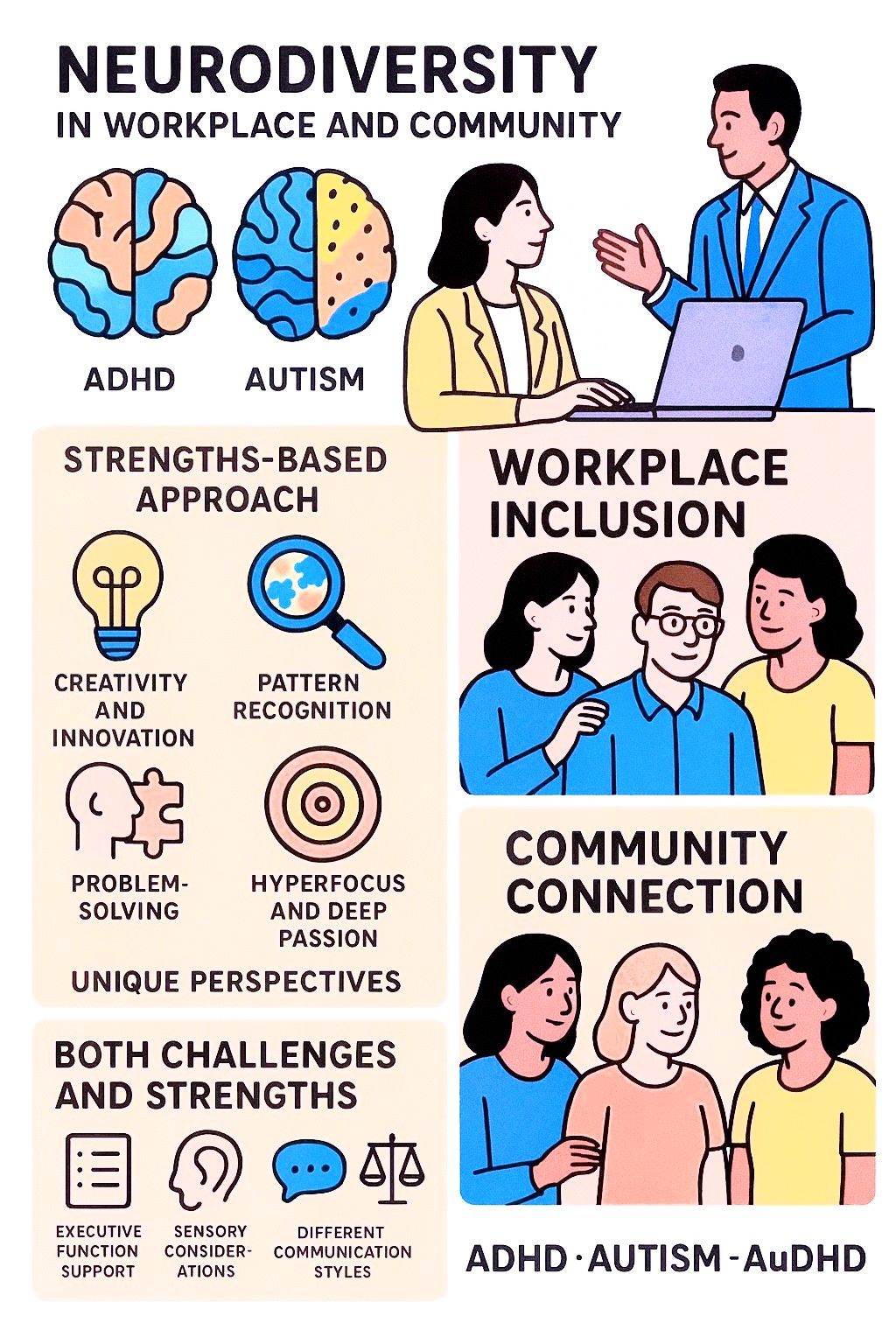
ADHD isn't about being lazy. ADHD brains are wired for creativity, hyperfocus, problem-solving, and seeing the big picture. They also come with real challenges around executive function, switching between tasks, and managing emotions. Research shows that adults with ADHD bring unique strengths to creative problem-solving and innovation, particularly in entrepreneurial settings. About 4.4% of adults in the U.S. have ADHD, though many remain undiagnosed, especially women and people of color who don't fit the stereotypical presentation.
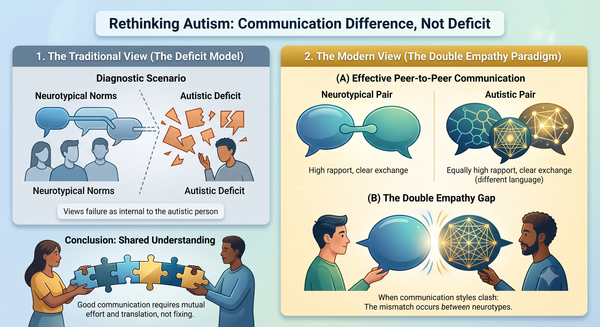
Autism isn't a flaw. Autistic people often bring incredible attention to detail, deep passion for what interests them, honesty, and fresh perspectives to the table. They may also experience differences in how they process sensory input and navigate social communication. Studies indicate that about 1 in 36 children are identified with autism spectrum disorder, and this continues into adulthood. Yet autistic adults face an unemployment rate as high as 85%, not because they lack skills, but because workplaces haven't adapted to different communication and sensory needs.
AuDHD (Autism + ADHD) means living with both neurodivergent experiences at once. It can feel like running two different operating systems simultaneously, which brings unique strengths but can also lead to overwhelm, masking exhaustion, burnout, and the ongoing challenge of not fitting "typical" expectations. Research has only recently begun examining the co-occurrence of autism and ADHD, with studies suggesting that 50-70% of autistic individuals also meet criteria for ADHD. The experience of AuDHD often includes intense pattern recognition abilities alongside struggles with conflicting needs (like craving both routine and novelty).

Why this matters for workplaces and communities:
When we make space for different kinds of brains, everyone benefits. Real inclusivity goes beyond just offering accommodations. It's about recognizing the actual value that neurodivergent people bring to our workplaces, schools, and communities.
Companies that embrace neurodiversity hiring programs report significant benefits. Microsoft, SAP, and JPMorgan Chase have found that neurodivergent employees often excel in roles requiring pattern recognition, quality assurance, data analysis, and sustained attention to detail. Some teams with neurodivergent members show productivity increases of 30% or more when proper supports are in place.
But here's what really matters: whether someone has a diagnosis or self-identifies, many of us are navigating systems that weren't built with us in mind. We're still here, contributing meaningfully and growing every single day. When workplaces offer flexible schedules, clear communication, sensory-friendly spaces, and respect for different working styles, everyone gets to show up more authentically.
The shift we need isn't about "fixing" neurodivergent people. It's about building communities and workplaces where different brains can actually thrive.
Resources for Support:
- CHADD (Children and Adults with ADHD): chadd.org - Support, education, and advocacy for ADHD
- Autistic Self Advocacy Network (ASAN): autisticadvocacy.org - Advocacy by and for autistic people
- Neurodiversity Hub: neurodiversityhub.org - Workplace resources and training
- ADDitude Magazine: additudemag.com - **MY FAVORITE RESOURCE!!** Practical strategies for ADHD
- Reframing Autism: reframingautism.org.au - Strengths-based autism understanding
- Job Accommodation Network (JAN): askjan.org - Free workplace accommodation guidance
also, check out AuDHD Support Groups:
Search local or online communities specifically for AuDHD experiences
References & Research:
Kessler, R.C., et al. (2006). “The prevalence and correlates of adult ADHD in the United States.” American Journal of Psychiatry, 163(4), 716-723.
Maenner, M.J., et al. (2023). “Prevalence and Characteristics of Autism Spectrum Disorder Among Children Aged 8 Years.” MMWR Surveillance Summaries, 72(2), 1-14.
Austin, R.D., & Pisano, G.P. (2017). “Neurodiversity as a Competitive Advantage.” Harvard Business Review, 95(3), 96-103.
Rong, Y., et al. (2021). “Comorbidity between autism spectrum disorder and attention-deficit/hyperactivity disorder.” Developmental Medicine & Child Neurology, 63(5), 530-536.
Taylor, M.J., et al. (2020). “Is there a female protective effect against attention-deficit/hyperactivity disorder?” Journal of Child Psychology and Psychiatry, 61(3), 273-284.