When Autism Meets ADHD: From Partnership to Parenting

Share
When Autism Meets ADHD: From Partnership to Parenting

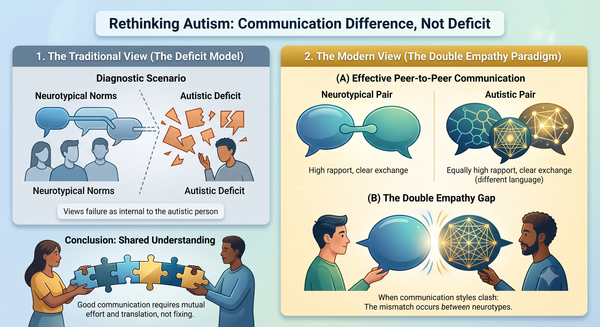
There’s something really special that happens when an autistic person and someone with ADHD come together in a relationship. On the surface, it might seem like these two neurotypes would clash. One craves predictability, the other thrives on novelty. One processes deeply and deliberately, the other jumps from thought to thought like a pinball. But here’s what I’ve seen work magic in these partnerships: those differences? They can actually become your greatest strengths.

And when you add kids to the mix? That’s when things get really interesting.

a couple of people walking down a wet road
Photo by Pourya Gohari on Unsplash

Why These Relationships Have So Much Potential

You Get Each Other in Ways Others Don’t

Both of you know what it’s like to move through a world that wasn’t designed for how your brain works. That shared experience of feeling “different” creates an instant foundation of empathy. You don’t have to explain why the grocery store is overwhelming or why you need to finish researching that new interest before bed. You just get it.

Your Strengths Actually Balance Out

Think about it: autistic partners often bring incredible focus, structure, and stability to the relationship. They can hyperfocus on important details, create systems that work, and provide a grounding presence. ADHD partners bring energy, creativity, and the kind of spontaneity that keeps life from getting stale. They’re often the ones who say “let’s try this new thing” or pivot when plans need to change.

When you’re both working with your strengths instead of against them, you can build something really solid together.

Passion Recognizes Passion

Both autism and ADHD come with the capacity for intense interest and passion. When you find shared interests, you can dive deep together in a way that feels incredibly connecting. That mutual ability to get completely absorbed in something you love creates its own kind of intimacy.

man in white shirt wearing silver ring
Photo by Kadarius Seegars on Unsplash

What to Keep an Eye On (Because Every Relationship Has Growing Edges)

Communication Needs Look Different

Autistic partners often need communication to be direct and literal. Say what you mean, mean what you say. Ambiguity can feel confusing or even anxiety-provoking.

ADHD partners might communicate in a way that feels scattered or jumps around, but that’s just how their brain is tracking multiple threads at once. What they need most is patience, not judgment about their communication style.

The key? Be explicit about what you need, and create space where both of you can express yourselves without feeling like you’re doing it “wrong.”

Your Processing Styles Are Just Different

An autistic partner might want to explore one topic thoroughly before moving on. An ADHD partner might bring up five different topics in the same conversation because their brain is making connections across all of them simultaneously.

Neither of these is wrong. They’re just different ways of thinking. You might need to slow down for each other sometimes, or speed up, or just name what’s happening so you both understand the rhythm you’re each moving at.

Emotions Show Up Differently Too

Both of you experience emotions intensely, but the expression can look really different. Autistic partners might have strong reactions to sensory input or need time alone to process feelings. ADHD partners often experience emotional swings that can feel sudden and intense, and might react quickly without meaning to.

Some things that help: mindfulness practices, sensory tools (fidgets, noise-canceling headphones, whatever works), and having a plan for when either of you gets overwhelmed. Talk about it when you’re calm, not in the middle of a meltdown or emotional flood.

The Routine vs. Spontaneity Dance

This is a big one. Routines help autistic partners feel safe and regulated. Spontaneity helps ADHD partners feel engaged and alive. You need both, and finding that balance takes some creativity.

Try scheduling both types of time. “Adventure time” where spontaneity is welcomed, and “predictable time” where routines stay intact. When you plan for both, neither person feels like they’re sacrificing what their brain needs to function.

The Push-Pull Dynamic

ADHD partners often pursue connection. They want feedback, engagement, reassurance that you’re there and you care. When they don’t get it, they might pursue more intensely.

Autistic partners might withdraw when emotional intensity gets too high. It’s not rejection. It’s self-preservation when things feel like too much.

Both of these are completely valid responses to your different needs. The ADHD partner is seeking emotional closeness to feel valued. The autistic partner needs emotional safety through predictability and space. Neither of you is wrong. You’re just responding to what your nervous system needs in that moment.

Watch the Load-Bearing

Sometimes one partner ends up carrying more of the functional load, and it can shift depending on what’s happening. If the autistic partner is dealing with a lot of change, the ADHD partner might need to step up with decision-making and flexibility. If the ADHD partner is struggling with executive function, the autistic partner’s organizational skills become the scaffolding.

This is fine when it happens naturally and you’re taking turns. It becomes a problem when one person is always holding everything together and starting to resent it. Check in with each other. Make sure the support flows both ways.

Sensory Needs Matter

Both of you probably have sensory sensitivities, which can actually be a gift because you understand why certain environments are hard. But your specific sensitivities might not be the same. One of you might need it quiet while the other needs background noise. One might seek deep pressure while the other can’t stand being touched when overwhelmed.

Find compromise where you can, and create separate sensory zones when you can’t. Sometimes the best solution is giving each other permission to have different spaces for regulation.


person holding white plastic frame
Photo by ERIC ZHU on Unsplash

When Kids Enter the Picture: Your Partnership Becomes a Parenting Team

Here’s where things get layered in beautiful and complicated ways. The same dynamics that make your partnership work (or need work) show up in parenting, but now you’re navigating a tiny human who might share one, both, or neither of your neurotypes.

And honestly? Neurodiverse parents often have some serious advantages when it comes to raising neurodiverse kids.

The Hidden Gifts You Bring as Neurodiverse Parents

You Already Speak the Language

When your child melts down over the seam in their sock or needs to tell you everything they learned about dinosaurs right now, you’re not confused. You get it on a cellular level because you’ve lived some version of it yourself. That deep understanding creates connection and helps you respond with compassion instead of frustration.

One autistic mom described recognizing her son’s sensory sensitivities immediately because she knew what it felt like when the world was “too much.” She didn’t need anyone to explain why he needed his towels warmed for exactly five minutes or why shoes had to be adjusted just right. She’d been there.

You Model That Different Is Not Broken

Your kids get to grow up watching you navigate the world as your authentic self. When you use your noise-canceling headphones, take breaks when overwhelmed, or hyperfocus on a project for hours, you’re showing them that accommodating your needs is normal and necessary. You’re living proof that neurodivergent people can build full, meaningful lives.

You Think Outside Traditional Parenting Boxes

Neurodiverse parents often come up with brilliantly creative solutions because traditional approaches don’t work for your brain anyway. You’re already used to figuring out systems that actually fit how you function rather than following what “everyone else” does. That flexibility and innovation serves you incredibly well when parenting kids who also need customized approaches.

Father stressed as son jumps on couch
Photo by Vitaly Gariev on Unsplash

The Realistic Challenges (Because We’re Keeping It Real)

Executive Function Can Get Overwhelming Fast

Managing your own executive function tasks is one thing. Add in keeping track of school forms, permission slips, appointment times, meal planning, and all the invisible labor of parenting? It can feel crushing.

ADHD parents may forget appointments and school events, get distracted mid-task leading to half-finished projects, and struggle with maintaining routines and consistency. Research has found that fathers with high ADHD symptoms may use more permissive parenting approaches, particularly with neurotypical children.

Here’s what helps: External systems. All of them. Shared digital calendars, visual schedules, alarms for everything, meal delivery services, whatever reduces the cognitive load. You’re not failing if you need scaffolding. You’re being smart about working with your brain.

Your Sensory Limits Get Tested Constantly

Kids are loud. They touch you constantly. They create chaos and mess and unpredictability. If you’re someone who needs quiet to regulate or gets touched-out easily, parenting can push you past your limits daily.

In neurodiverse families, sensory sensitivities can go in opposite directions - one child might have a loud voice while being sensitive to noise from others, while a sibling is extremely sensitive to loud sounds.

Creating sensory-friendly spaces in your home isn’t optional, it’s essential. You might need a quiet room where anyone can go to decompress. You might need to teach your kids that sometimes mom or dad needs space before they can engage. That’s not rejection, that’s modeling healthy boundaries.

When Your Needs Clash With Your Child’s Needs

This is the real kicker. What if your autistic brain needs predictable routines, but your ADHD kid thrives on spontaneity and variety? What if you need things quiet and your child needs to move and make noise constantly to regulate?

There’s no perfect answer here, just the ongoing work of finding compromises that honor everyone’s nervous system. Sometimes that means structured routine with planned “wild time.” Sometimes it means noise-canceling headphones for you while your kid bounces on a trampoline. Sometimes it means acknowledging that you can’t meet everyone’s needs perfectly all the time, and that’s okay.

person holding baby's index finger
Photo by Aditya Romansa on Unsplash

How Your Partnership Dynamics Show Up in Parenting

The Autistic Parent’s Superpowers

You bring structure and predictability that can be incredibly grounding for kids. You notice details others miss. You can create systems and routines that help everyone feel secure. Your ability to focus deeply means you can really understand your child’s interests and needs.

But you might struggle when plans change suddenly, when emotional demands feel too intense, or when you need processing time but parenting requires immediate responses. Your partner can step in during these moments, handling the chaos while you regulate.

The ADHD Parent’s Superpowers

You bring flexibility and spontaneity that helps your family adapt when life throws curveballs. You’re often amazing at play, at following your kid’s energy, at making boring tasks fun. Your creativity helps you think of solutions others wouldn’t consider.

But you might struggle with consistency, with remembering all the details, with following through on routines when they feel monotonous. Your partner can provide the structure that keeps things from falling apart, creating systems you can both rely on.

Together, You’re More Than the Sum of Your Parts

When neurodiversity is embraced in families, positive dynamics like increased empathy, creativity, and supportive feedback loops can flourish.

One parent can handle mornings with their predictable routine while the other parent takes evening chaos. One can manage the calendar and appointments while the other brings the play and adventure. You can trade off who’s “on” based on whose regulation is most stable that day.

The key is communicating clearly about your bandwidth and being willing to flex when your partner needs support. Just like in your relationship, the load-bearing in parenting needs to shift back and forth, not land permanently on one person.

a mother duck with her ducklings in the water
Photo by Bernd 📷 Dittrich on Unsplash

Practical Strategies That Actually Work

Create Visual Systems for Everyone

Visual schedules, charts, and planners help neurodiverse children know what to expect and reduce anxiety. But here’s the thing: they help neurodiverse parents too. Put up a family calendar everyone can see. Use checklists for morning routines. Take photos of how things should look when cleaned up.

Build in Regulation Time for Parents

You can’t pour from an empty cup, and neurodiverse parents need active regulation strategies. Maybe that’s alone time every evening. Maybe it’s taking turns sleeping in on weekends. Maybe it’s each parent getting one night a week to pursue their special interest without interruption.

Embrace “Good Enough” Parenting

You don’t have to follow a perfect schedule, just find small habits that help keep things running smoothly and lean into what you do well. The house doesn’t need to be immaculate. Meals don’t need to be elaborate. Your kids don’t need a million activities. They need you present and regulated more than they need perfection.

Find Your Village

Other neurodiverse families get it in a way others might not. Whether it’s online communities, support groups, or just one other neurodiverse parent you can text at 2am when you’re overwhelmed, connection matters. You’re not meant to do this alone.

Teach Your Kids About Different Operating Systems

Helping all family members understand why they struggle with certain activities and pointing out the strengths and challenges each person brings helps everyone recognize that none of us has it all figured out.

Be open about neurodiversity in your family. Talk about how dad’s brain needs things organized a certain way and mom’s brain jumps between ideas quickly. Explain that you all have different sensory needs and that’s completely normal. This builds empathy between siblings and helps everyone feel less “wrong.”

silhouette of man carrying child
Photo by Ante Hamersmit on Unsplash

When Your Child Shares Your Neurotype (Or Doesn’t)

When You See Yourself in Your Child

There’s something profound about recognizing your own experiences in your child. You know exactly why they’re struggling. You remember what it felt like. You can provide the understanding you wish you’d received.

But it can also be triggering. Watching your child face the same challenges you did might bring up your own pain. You might overidentify and have trouble seeing where their experience differs from yours. Having a partner with a different perspective helps you stay grounded.

When Your Child Has the Other Parent’s Neurotype

This is where your partnership diversity really shines. The ADHD parent can decode their ADHD child’s scattered communication style while the autistic parent provides structure. The autistic parent deeply understands their autistic child’s need for routine while the ADHD parent helps introduce flexibility.

You become translators for each other, helping your partner understand what your child needs when it matches your own neurology.

When Your Child Is Neurotypical

This can be its own kind of confusing. You might not instinctively understand why they’re upset or what they need. Your typical parenting strategies might not land the same way. But here’s the gift: with time and conversation, all family members can learn to adjust approaches and expectations so everyone can better understand and communicate with each other.

Your neurotypical child still benefits from having neurodiverse parents. They learn early that people’s brains work differently, that accommodation is normal, that there are many valid ways to move through the world.

people walking on street during daytime
Photo by Hưng Nguyễn on Unsplash

The Real Truth About These Partnerships Becoming Families

Your different ways of being aren’t problems that need fixing. You’re not “too much” and “not enough” in opposite directions. You’re two people with different operating systems trying to build something together, and now you’re raising small humans in the middle of it.

When the ADHD parent is full of ideas and energy, they’re not trying to mess up the autistic parent’s carefully structured day. When the autistic parent needs things to stay predictable, they’re not trying to control the ADHD parent’s freedom. When your kid is melting down and you’re dysregulated and your partner is overwhelmed, you’re all just trying to get through it together.

The beauty is in understanding that. When you can see each other’s behaviors - and your children’s behaviors - as attempts to regulate and connect rather than as personal attacks or incompatibilities, everything shifts. You start working with your differences instead of against them.

In neurodiverse families, each member’s behavior impacts the others, creating a living system where understanding everyone’s needs becomes essential. You’re not just tolerating each other’s neurotypes. You’re building a family culture that works because of them.

And that’s when these families really shine. Because you’re not just surviving - you’re creating a home where everyone’s different operating system is respected, where regulation is prioritized over perfection, where your kids learn early that their brains are different, not broken.

Is it hard sometimes? Absolutely. Will you get it wrong regularly? Of course. But you’re also modeling something powerful: that people with different needs can love each other well, support each other’s growth, and build lives that honor who they actually are instead of who they think they should be.

Your kids are watching you figure this out. They’re learning that relationships take work, that everyone needs different things, that it’s okay to ask for accommodations, that love looks like trying to understand each other’s world.

That’s not despite your neurodiversity. That’s because of it.


Note: The experiences described here are based on common patterns in autism-ADHD partnerships and parenting, but every family is unique. What works for one family might not work for another, and that’s completely okay. Trust what you know about yourselves, each other, and your kids. You’re the experts on your own family.

Additional Resources

If you’re looking for more support:

  • Connect with other neurodiverse families through online communities and local support groups
  • Seek out neurodiverse-informed family therapists who understand both autism and ADHD dynamics
  • Explore books and resources specifically about neurodivergent parenting
  • Remember that asking for help isn’t failing - it’s being smart about building your support system

Your family doesn’t need to look like anyone else’s. It just needs to work for all of you.


black hardbound books on shelves
Photo by Jake Lorefice on Unsplash

BONUS SECTION:
Autism & ADHD Partnerships and Parenting: Complete Reference List

A curated collection of articles, resources, and research for neurodiverse couples and families.

1. Strides ABA - Autistic Husband and ADHD Wife: What’s It Like?

2. Neurodiverse Couples - Autism Meets ADHD: Can Polar Opposites Make Great Partners?

3. Ptpsychotherapy - Neurodiverse Love: How ADHD and Autism Complement Each Other in Relationships

4. Everand Podcast - The Couple Dynamic When One Partner is Autistic and the Other is ADHD

5. Love on the Autism Spectrum - Emotional Intimacy for Neurodiverse Couples

6. AANE - How to Support Everyone in a Neurodiverse Family

7. ADDitude Magazine - Autistic Mom, ADHD Child: Neurodivergent Family Ties

8. Matrescence Therapy - Neurodivergent Parents: Thriving in Parenthood

9. Attwood & Garnett Events - How to Create a Neurodiversity-Affirming Family Environment

10. AANE - Understanding the Neurodiverse Family

11. Beautifully Complex/Parenting ADHD and Autism - SIGNAL Parenting Framework

  • Link:

https://parentingadhdandautism.com/

  • Subject: Behavior decoding for neurodivergent children
  • Value: Framework for understanding children’s behavior as signals rather than problems, with practical tools for responding with confidence and raising regulated, thriving kids

12. NEURODIVERSITY Belgium - Neurodivergents as Parents

  • Link: https://neurodiversity.be/neurodivergents-as-parents/
  • Subject: Collection of resources for neurodivergent parents
  • Value: Extensive compilation of articles, research, personal stories, and perspectives from multiple generations of autistic and ADHD parents navigating parenthood

13. Help and Healing Center - Parenting Neurodiverse Children: Strategies and Support

14. Child Mind Institute - What Is Neurodiversity?

  • Link: https://childmind.org/article/what-is-neurodiversity/
  • Subject: Understanding neurodiversity as a concept
  • Value: Clear, accessible explanation of neurodiversity as natural variation in brain function, focusing on differences rather than deficits, with guidance for parents

15. Therapy for Pet People - ADHD and Autism Parenting Resources

  • Link: https://therapyforpetpeople.com/neurodivergence-parenting/
  • Subject: Comprehensive parenting resource collection
  • Value: Extensive collection covering daily living strategies, relationship dynamics, sensory issues, emotional support, and compassionate approaches to neurodivergent parenting

How to Use This Reference List

This list contains 15 carefully curated resources covering:

  • Couple Dynamics (References 1-5): Communication strategies, complementary strengths, and therapeutic support for autism-ADHD partnerships
  • Family Systems (References 6, 9-10): Understanding how neurodiverse family members interact and support each other
  • Parenting While Neurodivergent (References 7-8, 12): Personal stories and strategies for parents who are themselves autistic or have ADHD
  • Parenting Neurodivergent Children (References 11, 13, 15): Practical tools and frameworks for raising children with autism and/or ADHD
  • Foundational Understanding (Reference 14): Core concepts of neurodiversity

Each resource offers unique perspectives and actionable insights. Start with the subjects that most closely match your current needs, then explore related resources as you build your understanding and support system.


These resources represent a strength-based, neuro-affirmative approach to autism-ADHD partnerships and parenting. They honor the reality that different brains work differently—and that these differences can be sources of strength in relationships and families.