When Your Brain Knows Something’s Wrong, But You Can’t Find the Words

How Accelerated Resolution Therapy Helps You Heal Complex Trauma Without Reliving It
Share
When Your Brain Knows Something’s Wrong, But You Can’t Find the Words

Sometimes healing doesn’t look like we expect it to.

You might know something feels stuck. There’s this weight you carry, this tension that shows up in your body, in your relationships, in the way you move through the world. But when someone asks what’s wrong, the words scatter. Or maybe they come out all tangled, not quite capturing what you’re actually experiencing.

That’s where Accelerated Resolution Therapy (ART) comes in. And honestly? It’s changed how I work with people who’ve been through things that don’t fit neatly into stories.

Learning from the Source

I’m a trained Accelerated Resolution Therapy practitioner, and I had the privilege of receiving my training directly from Laney Rosenzweig—the therapist who developed ART back in 2008. Learning this approach from its creator gave me not just the technical skills, but the philosophy and heart behind why this therapy works so differently from traditional approaches.

Laney had been working in the mental health field for over two decades, trained in multiple approaches including EMDR (Eye Movement Desensitization and Reprocessing). She kept noticing something remarkable: when she modified how she used eye movements and integrated them with other techniques, clients were recovering right in front of her eyes. Often in a single session.

Her supervisor told her she needed to either go back to the standard protocol or call it something else. So she did—she created Accelerated Resolution Therapy, with ART as the acronym. “I like it because it’s very creative,” she explained in her 2016 TEDx talk, “and it’s also very fast.”

Being trained directly by Laney meant learning not just what to do, but understanding the discoveries she made through years of careful observation and experimentation with her clients. That depth of knowledge is what I bring to my practice.

The Core Principle

The beautiful part? You don’t have to tell me the details of what happened. You don’t have to relive anything. As Laney puts it: “Keep the knowledge; lose the pain.”

This isn’t just a catchy phrase—it’s what actually happens. You retain the factual memory of what occurred, but the emotional charge, the intrusive images, the body sensations that keep you trapped—those can change.

How It Actually Works

Here’s what we know about trauma and memory: when we recall an emotional memory, that memory becomes temporarily open to change. We’re actually always making small changes to our memories when we recall them—we just didn’t realize this was happening. Scientists call this process “reconsolidation.” When you remember something, your brain synthesizes new proteins and changes the emotional memory, which shifts how you view it. The facts stay the same, but the emotional charge can change.

ART uses this window of opportunity intentionally. Through sets of eye movements—similar to what happens during REM sleep—while you silently recall what’s troubling you, we can help your brain make the changes that free you from disturbing images, body sensations, and emotions that have been causing suffering.

Instead of just desensitization, Laney calls what happens in ART “positization”—you actively rescript your trauma scene, replacing negative images with positive ones of your own choosing. You’re the director. You decide what changes.

The Power of Not Having to Explain

I watched a clip from Laney’s TEDx talk that still gives me chills. A postal worker who’d been viciously attacked by a dog—bitten seven times, hospitalized for over a week, multiple surgeries—couldn’t work for years afterward. She’d tried exposure therapy. She’d tried everything. Every time she tried to talk about what happened, she’d have a panic attack.

In one hour-long ART session, something shifted. You could see it happening in real time. At the start, her distress was a 10-plus. Partway through, she said, “I feel happy. Is that weird? Like, I just feel like a sense of hope.” By the end, when asked if she could still see the traumatic images, she said, “It’s gone. I know this is where it’s supposed to happen and nothing’s happening.”

Later, when asked if it bothered her to talk about the attack, she said simply, “It’s an incident that happened to me. I have no feelings attached to it now.”

That’s what’s possible. Not forgetting what happened—but removing the emotional charge so you can actually live your life.

The Techniques That Come Together

As a trained ART practitioner, I work with several therapeutic approaches that Laney integrated into this method:

  • Rapid Eye Movements – Similar to what happens during REM sleep, these bilateral eye movements seem to help the brain process information differently. They’re thought to facilitate connection between the left and right sides of the brain, helping you access creativity and solutions the way you do when you dream.
  • Imagery Rescripting – This is where you become the director of your own story. You can change the scenes in your mind in any way you choose. One of Laney’s clients who’d experienced horrific childhood abuse imagined going to a “parent store” to choose a new parent—a metaphorical intervention that let her six-year-old self finally feel safe and loved.
  • Gestalt Techniques – These focus on present experience and emotional release. In ART, this might mean having conversations in your mind with people who aren’t present, or connecting with earlier versions of yourself who are still stuck in painful moments. One of Laney’s clients always saw herself as a child stuck at a window and didn’t know why. Through ART, she was able to go back, talk to that earlier self, and discover the child was angry about being left alone with sexual abuse. They forgave each other and became friends. The result? The client’s husband noticed she was suddenly able to feel relaxed by herself instead of anxiously codependent.
  • Exposure Therapy – But without the re-traumatization. You’re recalling the memory while doing eye movements, which helps your nervous system stay regulated even while processing difficult material.
  • Metaphorical Interventions – Dreams speak in metaphors, and so does ART. A client with a needle phobia needed blood drawn but couldn’t handle it. Through ART, he changed the needle image in his mind to a snow cone. Think about it—a snow cone is also pointed, cold, numbing, and something you hold and control. After one session, no more needle phobia. He just envisions snow cones.
  • Cognitive Behavioral elements – Though interestingly, with ART, cognitions (your thoughts and beliefs) tend to change naturally and organically as you change the images and sensations. You don’t have to work on challenging your thoughts separately.

The Research Behind It

I don’t bring tools into my practice unless there’s good reason to trust them. Dr. Kevin Kip at the University of South Florida received funding from the Department of Defense to study PTSD treatments, and he included ART in his research.

His findings? Clinicians could eliminate symptoms of complex military-experience PTSD in one to five sessions, with an average of three to four!

Military clinicians at Walter Reed, Fort Belvoir, Fort Benning, and Fort Hood were trained in ART. When surveyed, all of them found it less emotionally demanding on them as clinicians compared to other therapies. The vast majority found it was the therapy tolerated most easily by patients.

Multiple well-designed studies have shown ART helps improve symptoms of PTSD, depression, anxiety, mental distress, and sleep disturbance. In research with combat veterans, people typically completed treatment in an average of 3.7 sessions, with a 94% completion rate. In 2015, SAMHSA (the Substance Abuse and Mental Health Services Administration) recognized ART as an evidence-based treatment for trauma-related conditions, depression, and resilience.

Why It Works for Complex Trauma

When trauma is complex—not just one event but a pattern, a relationship, a childhood, a system that harmed you—healing needs tools that can reach those frozen scenes in your mind. The ones responsible for how you’re still reacting today.

Our earlier selves can keep us trapped with the emotions and sensations we felt back then. We keep reacting as we did in the past to those frozen memories. ART’s use of Gestalt techniques lets you rescript those childhood scenes, using your adult perspective to re-evaluate and reinterpret what happened.

Police officers, after experiencing trauma, often return to work the next day after an ART session. Clients frequently describe feeling “reset to their pre-trauma state.” One survivor who’d been assaulted by serial killer Jeffrey Dahmer while both were serving in the military worked through his trauma in an ART session. Afterward, when describing how he’d changed the visual scene in his mind, he said, “It’s like I never met the individual.” The images were gone. The facts remained, but without the emotional charge.

The Neurodivergent Brain and ART

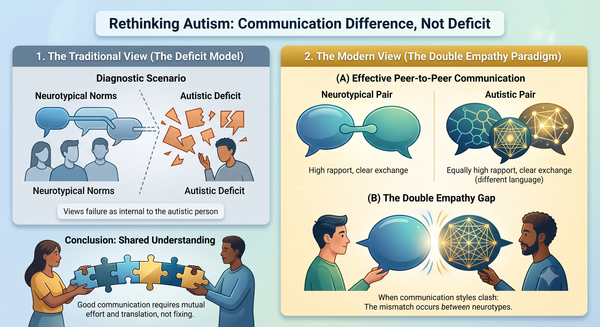
Something I’ve noticed in my practice: ART can be particularly helpful for neurodivergent folks. There’s no requirement to organize your thoughts into a coherent narrative. You don’t need to perform emotional processing in a way that looks “right” to anyone else.

Your brain processes in its own way, and ART respects that. The eye movements, the visual component, the metaphorical language that bypasses verbal explanation—these elements often work with, rather than against, how many neurodivergent brains naturally function.

We dream in metaphors. It’s perhaps a safer, easier way to approach problems—using dream language where anything can be resolved. Even choosing a new parent at a “parent store.” These pictorial metaphors, combined with eye movements, give you the power to make deep, meaningful, quick changes. A picture really is worth a thousand words.

Less Compassion Fatigue, More Healing

One thing Laney emphasized in my training that really matters: because ART focuses on changing images and sensations rather than on the content and details of trauma, it results in less compassion fatigue for clinicians. You don’t have to verbalize all the details. I don’t have to hear everything that happened to you. This protects both of us from secondary trauma while still allowing profound healing.

That matters. It means I can show up fully present for you without getting burned out. It means the therapy itself is sustainable.

When Words Aren’t Enough

You don’t need to have your trauma figured out to start healing. You don’t need the perfect explanation or the complete story. You don’t even need to know exactly what’s wrong—just that something is.

That’s enough. Your nervous system knows. Your body knows. And ART gives us a way to work with what your system is already holding, without forcing it into shapes that don’t fit.

We often end ART sessions with a metaphorical intervention—going over a bridge in your mind, putting distance between the problem and your future. One client threw eggs over the bridge and wasn’t sure why. When Laney asked if she’d been “walking on eggshells” while caretaking her parents, it clicked. That metaphor her unconscious mind chose made perfect sense. The client smiled.

Why I Offer This to My Clients

I’ve seen what happens when people feel like they’ve “failed” at therapy. When they’ve been told, directly or indirectly, that they’re not trying hard enough or not willing to do the work. - That’s nonsense!

Sometimes the tools don’t fit the person. Sometimes what you need is something that meets you where you are—in your body, in your images, in the sensations that don’t have words yet.

As an ART practitioner trained by Laney herself, I bring this approach to my clients because it puts you in control. You’re always aware that you consciously chose to change your images. The facts about what happened remain intact—but there’s no longer an emotional charge. You can recall what happened without being pulled back into that state.

Starting Where You Are

As Laney said in her TEDx talk:

“It is possible to erase negative images from view in our minds at our will, which can lead us to rapid healing from PTSD and other mental health problems.”

You’re already doing the hardest part by showing up. By acknowledging that something needs to shift. By being willing to try something new.

ART won’t be right for everyone, but if you’re someone who’s struggled with traditional talk therapy, who finds it hard to put experiences into words, or who’s tried other approaches without finding relief—this might be worth exploring.

You deserve tools that actually work with your brain, not against it. You deserve to feel lighter. And you don’t have to have it all figured out before we start.

Sometimes healing happens faster than we thought possible. Sometimes the images really can be erased from view. Sometimes you really can get your life back.


Want to learn more about whether ART might be right for you? As a trained ART practitioner, I’m here to answer your questions and explore whether this approach could be a good fit. Reach out—we can talk about what healing could look like in a way that actually fits your life and your brain. Serving California. gliszentherapeutic.com